

Jakarta – Indonesia is looking beyond the growth of electric vehicle sales and increasingly focusing on who makes the components behind those vehicles. The government is bringing small and medium-sized manufacturers into the electric vehicle supply chain as it seeks to increase local value creation, strengthen domestic manufacturing and create new industrial opportunities.
The strategy is particularly relevant to electric two-wheelers, where Indonesia is attempting to develop a broader domestic ecosystem rather than relying solely on finished vehicle production.
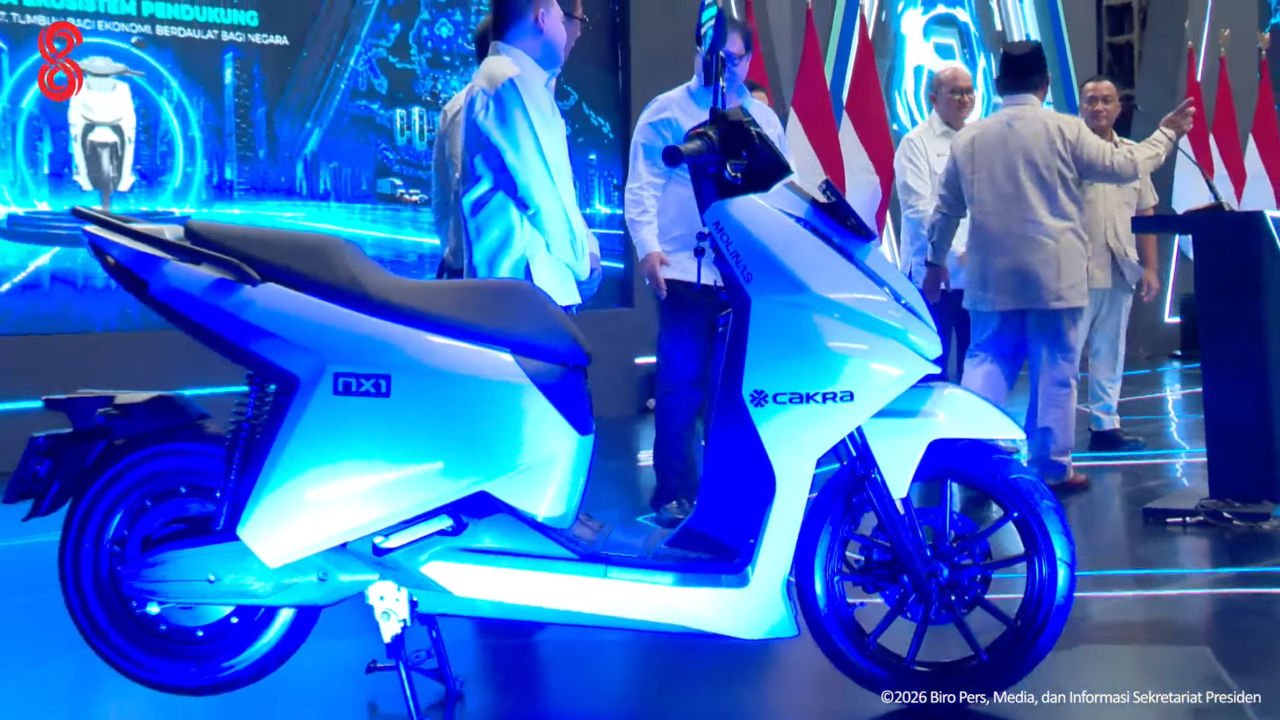
Two Indonesian small and medium-sized enterprises (SMEs), PT Kannindo Metal Industri and PT Multikon Rekatama Industri, have already become part of the country’s electric motorcycle supply chain. The companies were developed through programs run by Indonesia’s Ministry of Industry and now produce battery boxes and battery brackets for Alva’s Molinas electric motorcycle.
Their involvement provides an example of how local manufacturers could become suppliers to larger automotive companies as Indonesia’s EV market develops.
From Training Programs to Actual EV Orders
Indonesia’s Ministry of Industry is changing the way it develops small manufacturers for the automotive sector.
Instead of measuring success simply by the number of companies receiving training, the ministry wants SMEs to become qualified suppliers capable of meeting the requirements of major manufacturers.
Industry Minister Agus Gumiwang Kartasasmita said the objective is to ensure small manufacturers can enter established supply chains and receive sustainable orders.
“The target is not simply to have more SMEs receive development support, but to ensure they meet industrial requirements, qualify as suppliers, enter the supply chain and ultimately receive sustainable orders,” Agus said.
This approach puts actual industrial demand at the center of the development process.
For an SME, producing a component is only one part of becoming an automotive supplier. Manufacturers must also demonstrate consistent quality, production capacity, engineering capability, delivery reliability and compliance with required standards.
That makes the transition from a small manufacturer to an automotive supplier significantly more demanding than simply increasing production volume.
How Indonesia Is Developing EV Suppliers
The Ministry of Industry is using a supplier-development approach to connect local SMEs with original equipment manufacturers and larger Tier-1 suppliers.
The process starts by identifying the components required by major manufacturers. Government agencies then map local SMEs that could potentially produce those parts.
Companies considered suitable undergo a supplier-readiness assessment to identify gaps in their capabilities.
The assessment can cover technology, quality control, production capacity, engineering, certification, productivity, cost and delivery performance.
The goal is to determine exactly what an SME needs to improve before it can become a qualified supplier.
This approach also changes the direction of government assistance. Rather than developing manufacturing capabilities without a clear market, training and investment can be tied to specific requirements from vehicle manufacturers.
That could make the process more commercially sustainable if SMEs eventually secure purchase contracts after completing the qualification process.
Battery Components Are an Early Opportunity
Battery-related components represent one of the areas where Indonesian SMEs can potentially participate without immediately needing to manufacture the most technologically complex parts of an EV.
Kannindo Metal Industri and Multikon Rekatama Industri are examples of this approach. Their production of battery boxes and battery brackets for Alva’s Molinas electric motorcycle demonstrates how local companies can participate in an EV supply chain through components that require manufacturing and engineering capabilities.
Other opportunities include metal components, plastic parts, rubber components, seats, brackets, housings, sheet metal parts, fasteners and wiring harnesses.
These components can provide an entry point for companies that already possess relevant manufacturing capabilities.
The next stage is potentially more demanding.
SMEs with stronger engineering and manufacturing capabilities could move into higher-value components such as battery housings, motor housings, precision-machined parts, electrical components and components supporting battery packs and power electronics.
Moving into these areas would allow domestic suppliers to capture more value from the growth of the EV industry.
Business Matching Is Designed to Lead to Orders
Another important part of Indonesia’s strategy is the use of business-matching programs between SMEs, major manufacturers, OEMs and Tier-1 suppliers.
The objective is not simply to arrange meetings between companies.
The programs can include discussions about component specifications, supplier assessments, prototype development, testing and qualification processes.
Reni Yanita, Director General of Small, Medium and Miscellaneous Industries at the Ministry of Industry, said the ultimate objective is to secure purchasing commitments.
“The final orientation is the creation of purchasing commitments. Therefore, the success of the program is not measured only by how many SMEs participate in business matching, but by how many become qualified suppliers and receive sustainable industrial orders,” Reni said.
That distinction is important.
A business meeting does not automatically create a supply contract. For SMEs, the real challenge is converting an initial connection with an automotive manufacturer into a long-term relationship that generates repeat orders.
Electric Motorcycles Could Be an Important Starting Point
Indonesia’s electric motorcycle sector provides a potentially accessible entry point for local component manufacturers.
Two-wheelers generally involve smaller components and manufacturing processes that can be more accessible to domestic suppliers compared with some of the highly complex systems found in passenger cars.
The Ministry of Industry has therefore also supported training programs for electric motorcycle assembly and servicing, as well as programs involving electric three-wheel vehicles.
The ministry says it has worked with a national electric motorcycle manufacturer and two electric car manufacturers during 2026 to accelerate the integration of local automotive component SMEs into the EV ecosystem.
If successful, this could create a broader network of suppliers rather than concentrating manufacturing activity among a small number of major companies.
The Bigger Challenge Is Local Value Creation
Indonesia’s push to develop an EV industry is not simply about increasing the number of electric vehicles on its roads.
The longer-term industrial objective is to ensure that more of the economic value generated by EV production remains inside the country.
If vehicles are assembled domestically while most of their components are imported, the local economic impact remains limited. Developing domestic suppliers can potentially create additional manufacturing activity, engineering jobs, technical expertise and investment.
For SMEs, becoming part of an automotive supply chain can also provide a pathway toward higher production standards and access to larger markets.
However, achieving that goal will require sustained improvements in quality, technology, productivity and financing.
Automotive manufacturers typically require suppliers to meet strict specifications and maintain consistent production standards. SMEs that cannot meet those requirements will struggle to secure long-term contracts, regardless of government assistance.
Can Indonesian SMEs Compete on Higher-Value EV Components?
The early participation of local companies in battery boxes and brackets is an important starting point, but the more difficult test will be whether Indonesian SMEs can move into more sophisticated components.
Battery housings, motor housings, precision machining and power-electronics components require greater technical capabilities and investment.
That is where supplier-development programs could have a larger long-term impact.
If SMEs can successfully move from relatively straightforward components into higher-value systems, Indonesia could capture a larger share of the economic value generated by the EV transition.
It could also create domestic expertise that extends beyond the current generation of electric motorcycles and cars.
For now, Indonesia’s strategy is still developing. But the involvement of Kannindo Metal Industri and Multikon Rekatama Industri shows that the country’s EV supply chain is already beginning to extend beyond vehicle manufacturers.
The next challenge is turning more local SMEs into qualified suppliers — and ensuring that the growth of electric vehicles creates not just more vehicles on Indonesian roads, but a stronger manufacturing industry behind them.