

Jakarta – The role of automotive companies in global sports is increasingly extending beyond traditional sponsorships and vehicle displays. As mobility becomes an important part of major sporting events, automakers are also using their technology, vehicles and mobility solutions to support athletes, officials and spectators.
Toyota provides one example of this broader approach through its involvement with the Aichi-Nagoya 2026 Asian Games and Asian Para Games. Alongside supporting athletes through its Global Team Toyota Athletes program, Toyota Group is preparing mobility solutions intended to support transportation during the two major sporting events in Japan.
The Aichi-Nagoya 2026 Asian Games are scheduled to take place from September 19 to October 4, 2026, followed by the Asian Para Games from October 18 to 24. The scale of the events creates mobility requirements that extend across multiple competition venues and involve athletes, officials and other participants.
Toyota Group plans to provide more than 1,900 rental vehicles, together with 15 eco-vehicles and more than 100 small mobility units. The combination shows how the company’s role at a major sporting event can involve different forms of transportation rather than relying solely on conventional passenger cars.
This approach reflects a broader definition of mobility. For a major multi-venue sporting event, transportation is not simply about moving people from one location to another. It also involves providing suitable solutions for different users, locations and operational requirements.
Toyota’s involvement also extends to the athletes themselves. Through the Global Team Toyota Athletes program, the company has supported more than 20 athletes across Asia since 2018, representing different countries, sporting backgrounds, abilities and disciplines.
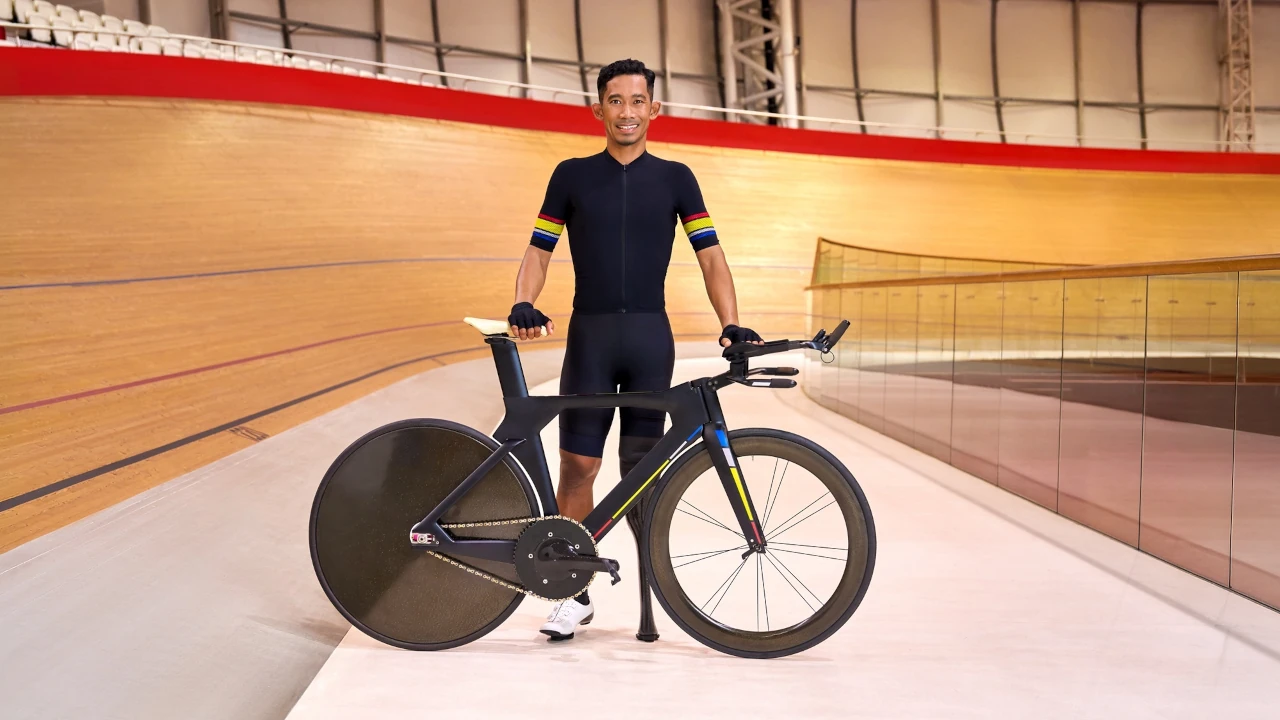
For the 2026 events, seven Global Team Toyota Athletes from Southeast Asia will represent their respective countries across six sports. Indonesia’s representative is para cyclist Muhammad Fadli Imamuddin, while the other athletes come from Malaysia, the Philippines, Singapore, Thailand and Vietnam.
Fadli’s journey illustrates another dimension of the relationship between mobility companies and athletes. He began his sporting career as a professional motorcycle racer before an incident in 2015 led him to move into para cycling.
He returned to competition in para cycling in 2017 and has since represented Indonesia at international events. His achievements include a gold medal at the 2025 ASEAN Para Games, while outside competition he also shares his experience with younger generations through activities at his motorcycle racing school.
For Toyota, supporting athletes therefore goes beyond their performance during competitions. The company says it also looks at the journey, determination and contribution of athletes within their communities.
This distinction is important as companies increasingly connect their brands with broader mobility themes. Athletes represent movement in a literal sense, but their stories can also demonstrate how people adapt to major changes and continue pursuing new goals.
The automotive industry’s relationship with sports has traditionally been visible through sponsorships, official vehicles and branding at major events. The growing emphasis on mobility introduces another layer, where companies can contribute directly to the transportation infrastructure required to make large sporting events function.
The Aichi-Nagoya 2026 program illustrates that shift through the combination of rental vehicles, eco-vehicles and small mobility solutions. Different types of vehicles can serve different operational purposes across venues, potentially making mobility planning more flexible than relying on a single vehicle category.
It also gives automotive companies an opportunity to demonstrate technologies and mobility concepts in a real-world environment. Sporting events bring together large numbers of people within a limited period, creating complex transportation requirements that can highlight the importance of efficient and accessible mobility.
For companies such as Toyota, this means their involvement in sports can operate on several levels at the same time. They can support individual athletes, contribute vehicles and mobility solutions to event operations, and use the occasion to demonstrate a broader vision of what mobility can mean.
The model may become increasingly relevant as cities and event organizers face the challenge of moving large numbers of people while also considering efficiency, accessibility and environmental impact. Major sporting events can therefore serve as practical environments for testing and deploying different mobility solutions.
Toyota’s participation in Aichi-Nagoya 2026 ultimately shows how the relationship between the automotive industry and global sports is evolving. The focus is no longer limited to putting a vehicle next to a sporting event; mobility itself is becoming part of how companies contribute to the event and the people taking part in it.