

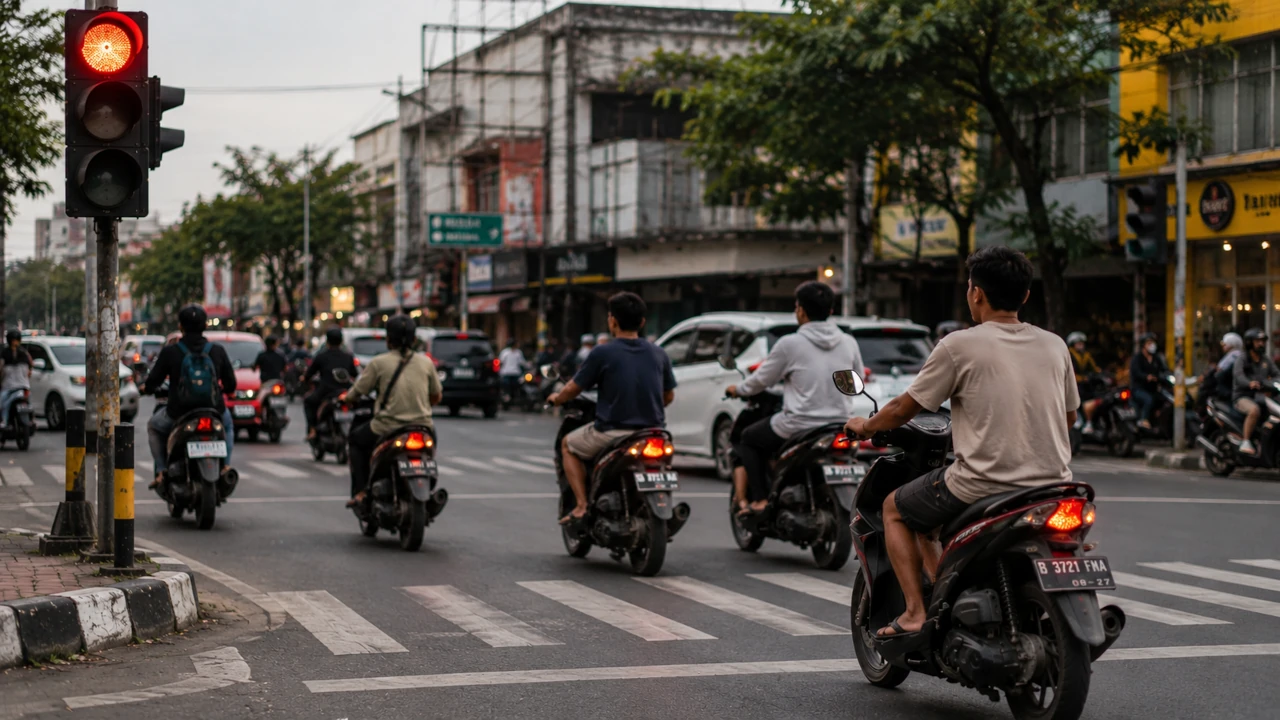
Jakarta – Driving in Indonesia can be very different from driving in countries with less crowded roads or more predictable traffic patterns. While the country has formal traffic laws, foreign drivers will also encounter a number of road habits that are useful to understand before getting behind the wheel.
Some of these habits are simply part of everyday traffic behavior, while others should not be copied because they are actually traffic violations. The important distinction for visitors is knowing what to expect without assuming that everything commonly seen on Indonesian roads is legal.
Here are several road habits and rules worth knowing before driving in Indonesia.
1. Traffic Keeps to the Left
Indonesia uses left-hand traffic, meaning vehicles generally travel on the left side of the road and the driver’s position is normally on the right side of the vehicle.
For visitors accustomed to driving on the right, this is one of the first things to adjust to. Extra attention is particularly important when turning at intersections, entering roundabouts or changing lanes.
2. Motorcycles Can Be Everywhere
Motorcycles are an integral part of everyday transportation in many Indonesian cities. They can be found alongside cars in slow-moving traffic and may move through gaps between vehicles.
Foreign drivers should therefore check their mirrors frequently, particularly before changing lanes or turning. A motorcycle that was not immediately visible can quickly appear alongside a vehicle.
This does not mean motorcycles have unlimited freedom on the road. Their movements still have to follow traffic signs, road markings and applicable regulations.
3. Do Not Assume Every Local Driving Habit Is Legal
One of the most important things for a foreign driver to understand is that seeing something repeatedly does not make it legal.
For example, driving against the flow of traffic is sometimes seen on Indonesian roads, particularly in congested urban areas. Korlantas Polri has repeatedly warned that driving against traffic is prohibited and can create a serious collision risk.
Visitors should follow the road signs and markings rather than copying another driver’s shortcut.
4. Give Motorcycles Extra Space When Changing Lanes
Lane changes require particular attention because motorcycles can be positioned close to cars or move through slow traffic.
Checking the side mirrors alone may not always be enough. Drivers should also check the relevant blind spot before moving across a lane, especially in dense urban traffic.
Korlantas Polri specifically warns motorists about staying in the blind spots of larger vehicles and emphasizes the importance of maintaining a safe distance.
5. A Short Horn Can Be a Traffic Signal
In Indonesia, a brief horn tap does not necessarily mean that another driver is angry. It can be used to make another road user aware of a vehicle’s presence, particularly when overtaking or approaching a tight space.
However, horn use varies considerably between drivers and locations. Foreign motorists should treat it primarily as an additional warning signal rather than relying on it to determine who has priority.
6. Small Roads and Alleys Require Extra Attention
Urban Indonesia has an extensive network of small streets and alleys connecting larger roads with residential areas, shops and local businesses.
Vehicles and motorcycles can emerge from these smaller roads with limited visibility. When approaching an intersection without a clear view, slowing down and preparing for cross traffic is often more important than simply following the speed of surrounding traffic.
7. Do Not Assume a Motorcycle Is Allowed Everywhere
Motorcycles are extremely common, but that does not mean every road is open to them.
For example, motorcycles are generally prohibited from Indonesian toll roads unless a particular toll route provides a physically separated lane specifically for two-wheeled vehicles.
Certain elevated roads can also have motorcycle restrictions. Korlantas Polri, for example, has highlighted motorcycle restrictions on Jakarta’s Jalan Layang Non Tol, including JLNT Casablanca and JLNT Antasari.
Foreign visitors riding rented motorcycles should therefore check the signs rather than assuming that a road is available simply because it appears to offer a faster route.
8. Helmets Are Mandatory for Motorcycle Riders and Passengers
For anyone renting a motorcycle, this is not an unwritten rule at all. It is a legal requirement.
Indonesian regulations require both motorcycle riders and passengers to wear helmets that meet the Indonesian national standard, or SNI. Korlantas Polri cites Article 106(8) of Law No. 22/2009 in explaining this requirement.
That means a passenger cannot simply ride without a helmet because the destination is nearby. The requirement applies to short trips as well.
9. Keep a Safe Distance From Trucks and Buses
Large vehicles can create significant blind spots for motorcycles and smaller cars.
Korlantas advises road users to avoid staying in areas where the driver of a truck or bus cannot see them. One practical reference is the vehicle’s side mirror: if you cannot see the truck driver’s mirror, the driver may not be able to see you either.
This is especially relevant when overtaking or traveling alongside heavy vehicles on busy roads.
10. Road Discipline Matters More Than Following the Crowd
Perhaps the most useful rule for foreign drivers is simple: do not use other road users as your guide to what is legal.
If several motorcycles move against traffic, that does not make the maneuver permissible. If another driver ignores a lane marking, that does not mean a visitor should do the same.
Indonesia’s traffic regulations require drivers to comply with applicable signs, prohibitions and road markings. Korlantas also emphasizes that overtaking should be carried out with adequate visibility and space, with the normal rule requiring the passing vehicle to use the right side.
Understanding the Difference Between Culture and Rules
Driving in Indonesia becomes easier when foreign visitors understand that traffic has both formal rules and informal habits.
The informal side includes things such as frequent motorcycle filtering through slow traffic, short horn signals and the unpredictable appearance of vehicles from smaller roads. These are behaviors that drivers may encounter and therefore need to anticipate.
The formal side is different. Helmet requirements, traffic directions, road restrictions, signs, markings and rules governing overtaking remain applicable regardless of whether local drivers appear to follow them consistently.
For foreign drivers, the safest approach is therefore not to imitate the traffic around them blindly. Understanding local road behavior can help anticipate what might happen next, but road signs, markings and traffic regulations should remain the primary guide.
That distinction can make driving in Indonesia less confusing while helping visitors adapt to one of Southeast Asia’s busiest and most varied road environments.