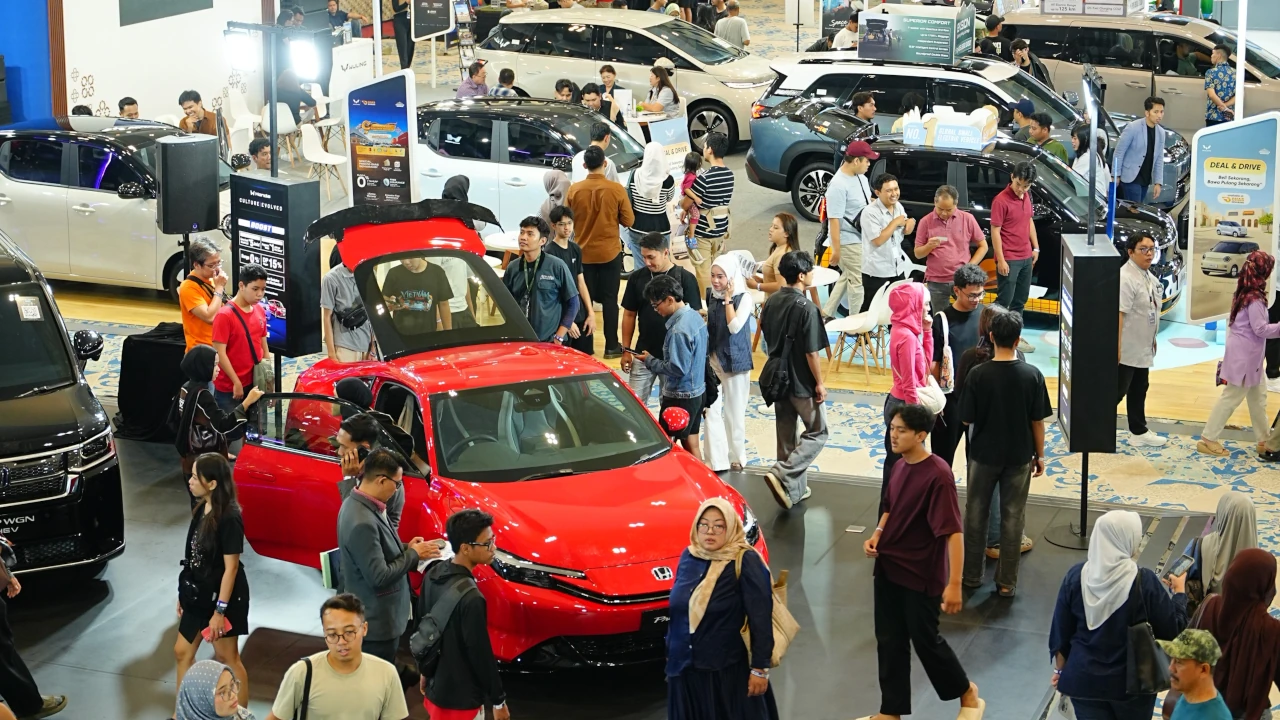
Semarang – Indonesia’s automotive market is becoming more diverse, with new brands joining established manufacturers across different segments. GIIAS Semarang 2026 offered a look at that change in Central Java, bringing 19 vehicle brands to the region over five days.
The exhibition took place from September 30 to October 4, 2026, at Muladi Dome and Convention Center, Semarang. It was part of the GIIAS The Series, which brings the automotive exhibition format to several cities across Indonesia.
The number of participating brands was one of the notable aspects of the Semarang show. The lineup included established manufacturers alongside newer names entering or expanding their presence in Indonesia.
19 Vehicle Brands Under One Roof
GIIAS Semarang 2026 featured 18 passenger vehicle brands and one motorcycle brand.
The passenger vehicle lineup included BAIC, BYD, Changan, Chery, Citroen, Daihatsu, GAC Aion, Geely, Honda, Jetour, Kia, Leapmotor, Mazda, Omoda Jaecoo, Suzuki, Toyota, VinFast and Wuling.
Polytron represented the motorcycle category.
The list shows how different the Indonesian automotive landscape has become. Traditional Japanese and European brands appeared alongside Chinese manufacturers and newer automotive players.
Five brands participated in GIIAS Semarang for the first time. Three other brands also returned to the exhibition.
Their presence gives consumers in Central Java more opportunities to see different products and technologies in one location. It also indicates that regional auto shows are becoming another channel for brands to introduce themselves to potential customers outside the country’s largest automotive market.
More Choices for Central Java Consumers
A wider range of brands can change the way consumers approach the car market.
Customers no longer have to choose only between a small group of long-established manufacturers. New brands have entered the market with different vehicle types, technologies and business strategies.
Electrification is also becoming more visible within that mix. GIIAS Semarang included brands such as BYD, GAC Aion, Leapmotor, VinFast and Wuling, alongside manufacturers with conventional and electrified vehicles in their respective lineups.
However, the exhibition itself does not provide enough information to determine how market shares are changing among these brands in Central Java. The presence of a brand at an auto show should therefore not be treated as a direct measure of its sales performance in the region.
Instead, the lineup provides a snapshot of the increasing number of choices available to consumers.
28,876 Visitors in Five Days
GIIAS Semarang 2026 recorded 28,876 visitors during its five-day run.
The figure provides an indication of the level of public interest in the event. Visitors could see new vehicles, automotive technologies and products from supporting industries at the exhibition.
The event also included 22 brands from the automotive supporting industry.
For consumers, these companies form another part of the ownership ecosystem. Financing, accessories, components and other supporting products can influence the overall cost and experience of owning a vehicle.
The combination of vehicle manufacturers and supporting companies therefore makes an auto show more than a collection of new-car displays.
Regional Auto Shows Are Becoming More Important
GIIAS Semarang is also part of a broader effort to bring major automotive exhibitions closer to consumers outside Greater Jakarta.
The 2026 GIIAS The Series includes exhibitions in several major Indonesian cities. Semarang follows events in Tangerang, Surabaya and Bandung.
The series will conclude with GIIAS Makassar from October 28 to November 1, 2026.
GIIAS will also add Bali to its schedule next year. The new exhibition is planned for January 27–31, 2027, at The Meru Sanur.
The expansion means manufacturers can use regional exhibitions to reach different markets without relying on a single national event.
For consumers, it can also reduce the distance between new vehicle launches and the markets where those vehicles are sold.
What GIIAS Semarang Tells Us About the Market
The most notable takeaway from GIIAS Semarang 2026 is the variety of brands now competing for attention in Indonesia.
The presence of 19 vehicle brands, five first-time participants and three returning brands illustrates how quickly the market has evolved. Chinese manufacturers and newer automotive companies now appear alongside brands that have operated in Indonesia for decades.
That does not necessarily mean every new entrant will achieve the same level of sales. Market performance still depends on factors such as pricing, product availability, dealer coverage, after-sales service and consumer demand.
The growing number of brands does, however, give consumers more options.
For Central Java, GIIAS Semarang provides a useful meeting point between those brands and the regional market. The 2026 edition shows that the competition for Indonesian car buyers is no longer concentrated in a small group of established manufacturers.
As GIIAS continues to expand its regional footprint, exhibitions in cities such as Semarang, Makassar and Bali can provide another window into how Indonesia’s automotive market is changing beyond its traditional centers.