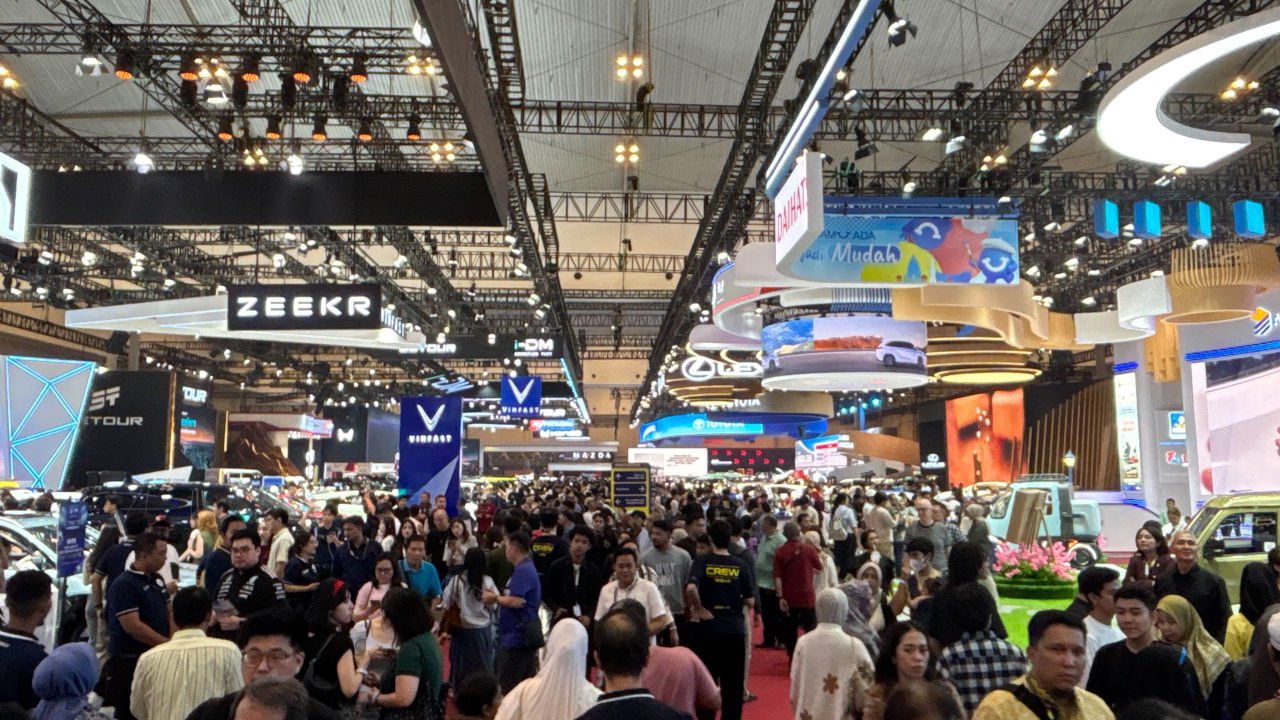
Jakarta – Indonesia’s car sales have experienced dramatic changes under three presidents: Susilo Bambang Yudhoyono, Joko Widodo, and Prabowo Subianto. The market has reached annual sales of more than 1.2 million vehicles, suffered a sharp decline during the COVID-19 pandemic, and faced renewed pressure in recent years.
Data from the Association of Indonesian Automotive Industries (GAIKINDO) shows how the market has evolved through these administrations. Indonesia recorded 1,229,811 units in wholesale sales in 2013. A decade later, the market remained above one million units in 2023 before dropping to 865,723 units in 2024 and 803,687 units in 2025.
These figures offer a useful perspective on the country’s automotive industry. However, they also reflect broader economic conditions, consumer purchasing power, financing costs, government incentives, and changes in the vehicles available to buyers.
SBY Era: Indonesia’s Car Market Reaches a Record
Susilo Bambang Yudhoyono served as Indonesia’s president from 2004 to 2014. During his administration, the automotive market expanded significantly, although annual sales did not increase every year.
In 2005, domestic vehicle wholesales reached 533,917 units. Sales dropped to 318,904 units in 2006 before recovering in subsequent years.
The market gained momentum toward the end of the decade. Annual wholesales reached 764,710 units in 2010 and 894,164 units in 2011. In 2012, sales surpassed the one-million-unit threshold, reaching 1,116,230 units.
The following year brought an even stronger result. Indonesia recorded 1,229,811 units in 2013, making it the highest annual figure in the historical series used for this comparison.
Several developments supported the expansion of the automotive market. Economic growth, rising vehicle ownership, and demand for family cars helped create opportunities for manufacturers. Automakers also continued developing their local production and distribution networks.
However, the market faced fluctuations along the way. The decline in 2006 illustrates that demand was not immune to economic pressures.
Sales remained high in 2014, reaching 1,208,019 units. That year was also a political transition, as Yudhoyono’s presidency ended in October and Joko Widodo took office.
Consequently, the 2014 figure represents a calendar year that spans two administrations. It should not be attributed entirely to either president.
Jokowi Era: From Strong Sales to a Pandemic Shock
Joko Widodo became president in October 2014 and served until October 2024. His administration witnessed several major changes in Indonesia’s automotive industry, including a recovery in sales, the COVID-19 crisis, and a subsequent rebound.
After falling to 1,013,518 units in 2015, annual wholesales recovered to 1,062,694 units in 2016. Sales reached 1,077,365 units in 2017 and climbed to 1,151,284 units in 2018.
The market then slowed to 1,030,126 units in 2019. In 2020, the pandemic caused a much sharper contraction.
Indonesia’s automotive wholesales fell to just 532,027 units that year. Restrictions on economic activity and uncertainty affected consumer spending, including purchases of expensive goods such as cars.
The market subsequently recovered. Wholesales rose to 887,202 units in 2021 and exceeded one million again in 2022, reaching 1,048,040 units.
Government incentives for eligible vehicles helped support demand during the recovery. Nevertheless, the market still faced challenges as economic conditions and consumer purchasing power influenced buying decisions.
In 2023, sales reached 1,005,802 units. The momentum weakened the following year, with wholesales falling 13.9% to 865,723 units.
This decline marked a significant change after the post-pandemic recovery. It also showed that Indonesia’s automotive market had not returned to its 2013 record.
Prabowo Era: Sales Fall Below 850,000 Units
Prabowo Subianto took office in October 2024. His first full calendar year as president was 2025, when Indonesia’s automotive market recorded another annual decline.
According to GAIKINDO, wholesale sales reached 803,687 units in 2025, down 7.2% from 865,723 units in 2024. Retail sales, which measure deliveries from dealers to consumers, totaled 833,692 units, a decrease of 6.3% from 889,680 units in the previous year.
The results indicate that demand remained under pressure during Prabowo’s first full year in office. However, one full year of sales data is not enough to establish a long-term trend or determine the impact of individual government policies.
Several factors can influence car purchases. These include household income, consumer confidence, interest rates, vehicle prices, and the availability of financing. New model launches and competition between automakers can also change buying decisions.
The market is also undergoing a technological shift. Hybrid and electric vehicles are gaining attention, while established manufacturers face increasing competition from newer brands.
For the industry, the challenge is to make new vehicles more accessible while responding to changing consumer preferences. The coming years will reveal whether Indonesia’s car market can regain momentum and move closer to its previous sales highs.
Comparing Car Sales Across Three Presidential Eras
The annual figures show how Indonesia’s automotive market has changed over time.
| Year | Wholesale Sales (Units) |
|---|---|
| 2005 | 533,917 |
| 2006 | 318,904 |
| 2007 | 433,341 |
| 2008 | 603,774 |
| 2009 | 486,088 |
| 2010 | 764,710 |
| 2011 | 894,164 |
| 2012 | 1,116,230 |
| 2013 | 1,229,811 |
| 2014 | 1,208,019 |
| 2015 | 1,013,518 |
| 2016 | 1,062,694 |
| 2017 | 1,077,365 |
| 2018 | 1,151,284 |
| 2019 | 1,030,126 |
| 2020 | 532,027 |
| 2021 | 887,202 |
| 2022 | 1,048,040 |
| 2023 | 1,005,802 |
| 2024 | 865,723 |
| 2025 | 803,687 |
Source: GAIKINDO annual automotive sales data. Figures represent wholesales, or vehicles distributed from manufacturers to dealers. Calendar years 2014 and 2024 span presidential transitions.
The comparison highlights three major developments.
First, Indonesia’s automotive market reached its record in 2013, during Yudhoyono’s presidency. Second, the market experienced both a strong pre-pandemic period and a historic contraction during Widodo’s administration. Third, sales continued to decline in 2025, the first full calendar year under Prabowo.
These developments provide historical context, but they do not establish a simple ranking of presidential performance. Economic conditions and major external events played important roles throughout the period.
What Comes Next for Indonesia’s Automotive Market?
Indonesia remains an important market for automakers, but sustaining annual sales above one million units has become a challenge.
The decline from the 2013 peak suggests that market growth cannot be taken for granted. The pandemic demonstrated how quickly demand can collapse during a major crisis, while the latest figures underline the importance of consumer purchasing power and financing conditions.
Competition is also changing. Japanese brands continue to play a major role, while Chinese manufacturers are expanding their presence, particularly in electrified vehicles. This shift could give consumers more choices and put additional pressure on prices, technology, and after-sales services.
For policymakers, supporting long-term demand will require more than temporary incentives. Economic growth, household purchasing power, financing access, industrial investment, and charging infrastructure will all influence the industry’s direction.
For manufacturers, the priority is to offer vehicles that match local needs and budgets while adapting to technological change.
Ultimately, Indonesia’s car sales under three presidents tell a story of expansion, disruption, recovery, and renewed pressure. The next phase will depend on whether consumer demand strengthens and automakers can respond to a rapidly changing market.