

Makassar – Indonesia’s automotive market is often associated with Java, where major cities and industrial centers account for a significant portion of vehicle demand. But as regional economies continue to develop, automakers are increasingly looking beyond the country’s traditional automotive centers for new opportunities.
Mazda is among the brands taking a closer look at this shift. The Japanese automaker recently introduced its latest products to consumers in Makassar, South Sulawesi, using the city as a gateway to strengthen its presence in eastern Indonesia.
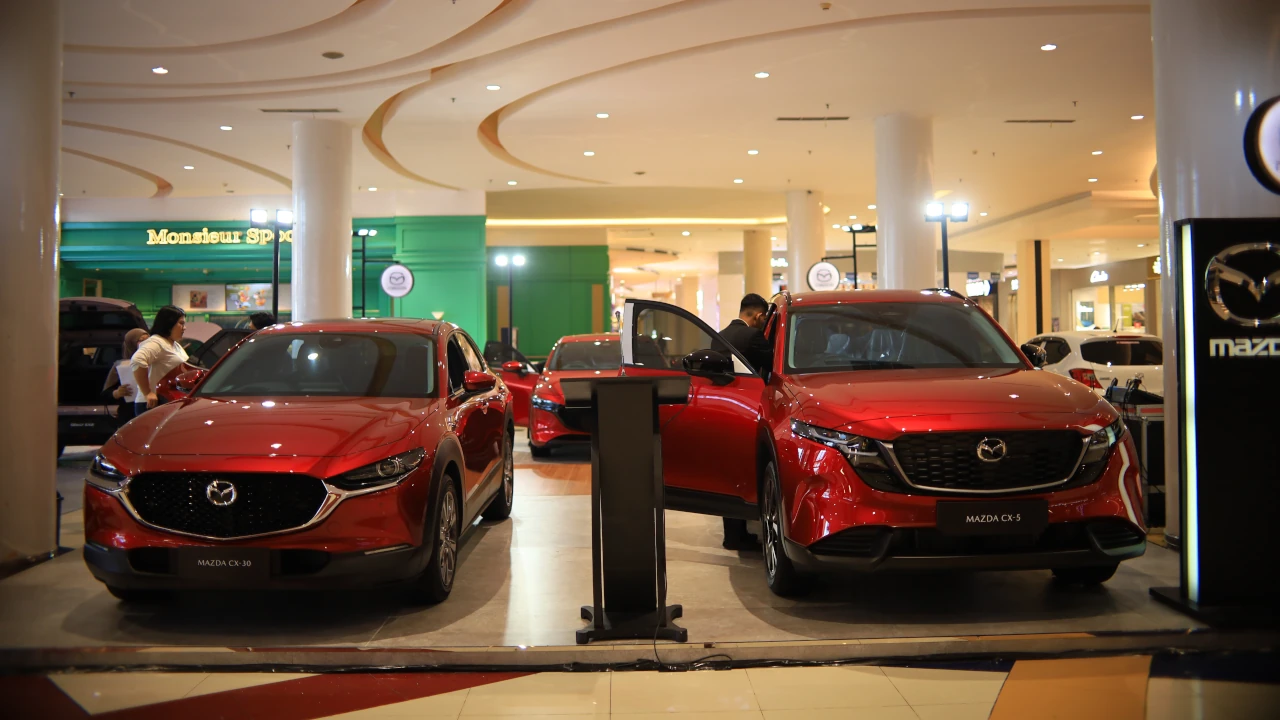
The regional product introduction featured the All-New Mazda CX-5, New Mazda CX-30 and All-New Mazda 6e Fastback. The move comes as Mazda sees room to expand its business in Makassar and surrounding areas.
Why Makassar Matters
Mazda’s sales contribution from Makassar remained below 5 percent of its total Indonesian sales through July 2026. On the surface, that figure may appear relatively small, but the company sees the market as having significant room for growth.
One factor supporting that outlook is the local economy. According to Statistics Indonesia, or BPS, Makassar’s economy grew 6.61 percent year-on-year in the first quarter of 2026.
Economic growth does not automatically translate into higher vehicle sales, but it can create a broader base of consumers and businesses with increasing purchasing power. For premium brands, this can be particularly important as consumers in regional cities look for products that combine technology, comfort and lifestyle appeal.
Makassar also serves as an important commercial and economic center for eastern Indonesia. Its role means developments in the city can have an influence beyond its immediate population.
Mazda Wants to Strengthen Its Regional Presence
Ricky Thio, Chief Operating Officer of PT Eurokars Motor Indonesia, said Mazda sees different characteristics and growth potential in each region.
For the company, Makassar represents an opportunity to introduce a wider range of products while strengthening Mazda’s relevance among consumers in eastern Indonesia.
The strategy also reflects a broader change in Indonesia’s automotive landscape. Consumers outside Java are increasingly exposed to new vehicle technologies, premium products and electrification options.
As more brands expand their networks and product portfolios, regional markets are becoming harder to overlook.
Three Products, Three Directions
Mazda’s latest lineup introduced in Makassar reflects different aspects of the company’s strategy.
The All-New Mazda CX-5 represents the latest generation of one of Mazda’s most important global SUV models. The new generation focuses on greater cabin space, improved comfort and technology designed to be more intuitive for everyday use.
For Makassar buyers looking for a premium SUV, the CX-5 sits in a segment that combines practicality with Mazda’s driver-focused approach. The model is offered in Sport Edition and Kuro Edition variants, with prices starting at Rp604.4 million on the road in Makassar.
The New Mazda CX-30 represents another important development because it is the first Mazda model assembled locally in Indonesia.
Produced at Mazda Indonesia Plant in Citeureup, West Java, the locally assembled CX-30 is intended to provide a more competitive offering while maintaining Mazda’s global manufacturing standards. Its Makassar on-the-road price starts at Rp506.6 million.
The third model points toward a different future.
Mazda 6e Brings Electrification Into the Picture
The All-New Mazda 6e Fastback introduces Mazda’s latest approach to electric mobility.
Although the model was not physically displayed in Makassar during the regional introduction, its presence in Mazda’s lineup signals that electrification is becoming part of the brand’s strategy for Indonesia.
The 6e combines a fastback design with an electric powertrain and Mazda’s Kodo design philosophy. It was also named the 2026 World Car Design of the Year, giving the model an additional connection to the global automotive design scene.
For Makassar and other regional markets, the arrival of products such as the 6e illustrates how premium vehicle choices are becoming more diverse outside Indonesia’s largest automotive hubs.
Regional Growth Is About More Than Selling Cars
Expanding into regional markets is not simply a matter of bringing vehicles to a new city.
Premium automotive customers typically expect access to sales, maintenance, service and ownership support. This means automakers need to consider the entire customer experience when entering or strengthening their position in a regional market.
Mazda is also offering test drives of the New Mazda CX-30 during its Makassar event, allowing potential customers to experience the vehicle rather than relying solely on specifications.
That approach is particularly relevant to Mazda because the company places considerable emphasis on driving characteristics and its Jinba-Ittai philosophy, which describes the connection between driver and vehicle.
The Bigger Opportunity Beyond Java
Makassar is not going to replace Jakarta, Surabaya or other major automotive markets overnight. But its economic growth and strategic position make it an increasingly relevant market for automakers seeking growth beyond Java.
Mazda’s decision to introduce three different products there also demonstrates how regional expansion can involve more than simply increasing showroom numbers.
It can mean bringing locally assembled vehicles, premium SUVs and electric models closer to consumers who previously had fewer choices.
For Indonesia’s automotive industry, that could become increasingly important as manufacturers face a mature and competitive market in major cities.
The next phase of automotive growth may therefore not come exclusively from the country’s traditional centers. As regional economies expand and consumer expectations rise, cities such as Makassar could play a much larger role in determining where Indonesia’s automotive market goes next.