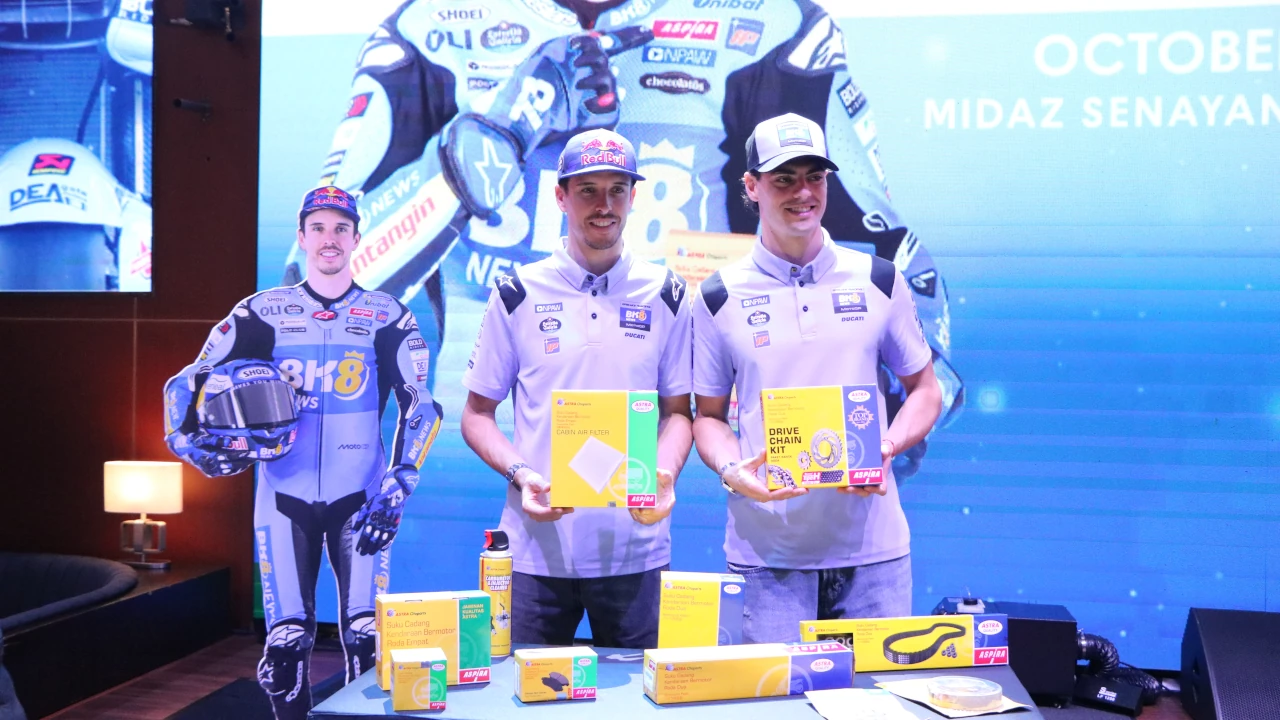
Jakarta – MotoGP in Indonesia is becoming an increasingly important platform for automotive brands looking to connect with consumers beyond conventional marketing channels. The combination of a large fan base, international racing personalities and growing interest around the Mandalika round gives brands an opportunity to build engagement through experiences rather than advertising alone.
Aspira, the automotive parts brand owned by PT Astra Otoparts Tbk, is one example of how that opportunity is being explored. Ahead of the 2026 MotoGP Mandalika event, Aspira brought Gresini Racing riders Alex Márquez and Fermín Aldeguer to Jakarta for an Aspira x Gresini Racing Meet & Greet on October 6.
The event gave fans, media and invited guests an opportunity to interact directly with the two MotoGP riders through a question-and-answer session covering their careers, experiences with Gresini Racing and preparations for the Indonesian round.
For Aspira, the activity represents a broader approach to its relationship with the automotive community.
A Growing Audience Creates More Opportunities
The commercial appeal of MotoGP in Indonesia is closely linked to the size of its audience.
The 2025 MotoGP Mandalika event attracted 140,324 spectators, according to data presented by Aspira. That figure represented a 15.73 percent increase compared with the previous year and became the highest attendance recorded since the Indonesian MotoGP returned to the Mandalika circuit in 2022.
The audience extends beyond those attending the circuit. According to the 2025 annual publication of the Mandalika Grand Prix Association, MotoGP broadcasts in Indonesia reached 2.96 million viewers.
Those numbers make MotoGP more than a three-day sporting event. For automotive companies, the race weekend provides access to a large and highly engaged audience with an existing interest in motorcycles, mobility and performance.
That creates room for brands to build a connection with consumers before, during and after the race itself.
From Sponsorship to Direct Engagement
Motorsport partnerships traditionally give brands visibility through team liveries, trackside advertising and other forms of branding. However, the growing Indonesian MotoGP audience also allows companies to create more direct experiences.
Aspira’s collaboration with Gresini Racing illustrates this shift.
Rather than limiting the partnership to the racing environment, the company used the presence of Alex Márquez and Fermín Aldeguer to create a face-to-face experience in Jakarta. Fans could ask questions, hear about the riders’ careers and interact with them outside the competitive environment.
The approach allows a parts brand to associate itself with the emotion and passion surrounding MotoGP while maintaining a connection with its own automotive audience.
According to Astra Otoparts Director Martogi Siahaan, the company’s collaboration with Gresini Racing is intended to strengthen engagement with automotive communities and create experiences that are relevant to consumers.
That strategy reflects a wider change in automotive marketing. Consumers increasingly encounter brands through experiences, communities and digital content rather than traditional advertising alone.
Why MotoGP Matters to Automotive Brands
MotoGP offers a combination that few other platforms can replicate. It brings together technology, engineering, competition, personalities and a highly engaged fan community.
For automotive brands, those elements can reinforce associations with performance and innovation while creating opportunities to communicate with consumers in a more emotional setting.
The Indonesian round is particularly relevant because MotoGP has developed a significant following since returning to the country.
The presence of a permanent international racing event also gives brands a recurring platform around which they can build campaigns, community activities and customer experiences.
For companies operating in the automotive aftermarket, such as Aspira, the connection can be particularly useful. The brand does not need to compete directly with motorcycle manufacturers to participate in the conversation around performance and motorsport.
Instead, it can position itself within the broader ecosystem surrounding riders, enthusiasts, communities and everyday vehicle users.
The Road Ahead for MotoGP Partnerships
The growing audience for MotoGP in Indonesia could make the championship an increasingly valuable platform for automotive companies.
The opportunity, however, goes beyond simply placing a logo next to a racing team. Brands that can translate a motorsport partnership into meaningful experiences may have more opportunities to build long-term relationships with consumers.
Aspira’s latest activity with Gresini Racing shows one possible direction. By bringing international riders closer to Indonesian fans, the company turns a racing partnership into a consumer-facing experience.
As MotoGP Mandalika continues to attract spectators and viewers, the value of the event for automotive brands may increasingly be measured not only by exposure, but also by how effectively they can become part of the community surrounding the sport.
For Indonesia’s automotive industry, that could make MotoGP an increasingly important platform for building connections between brands, consumers and the wider motorsport ecosystem.