

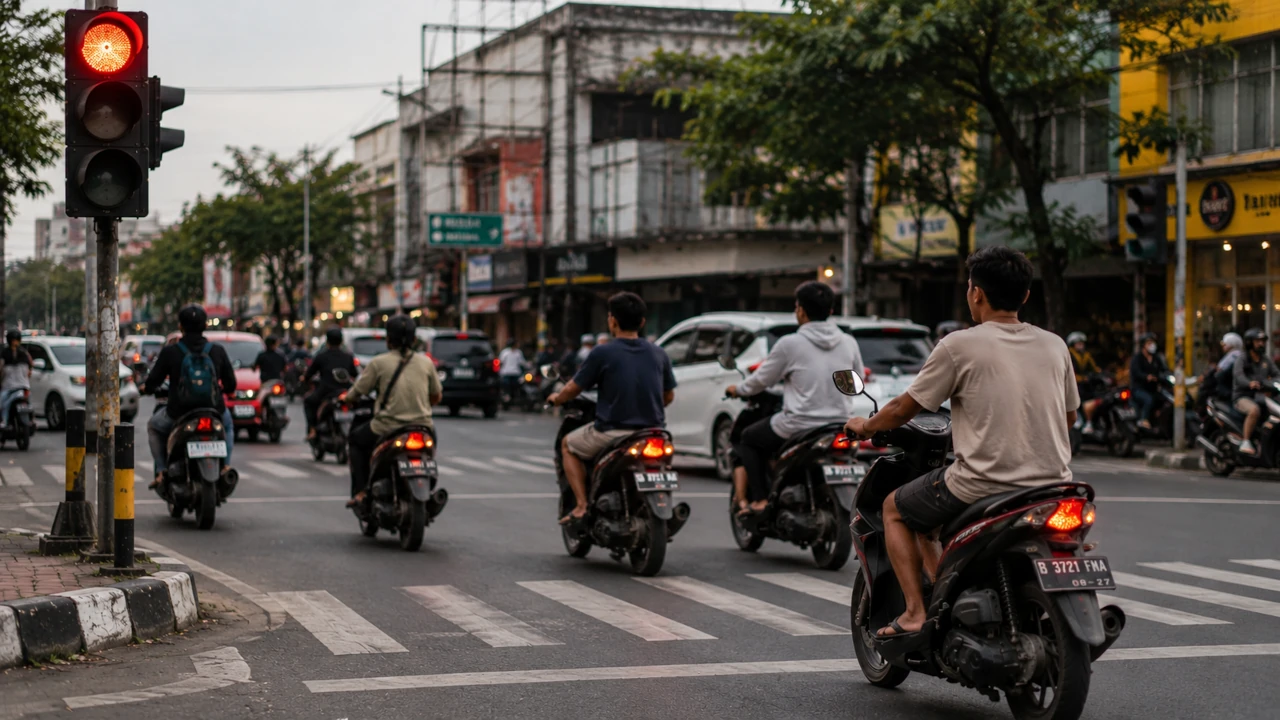
Jakarta – Indonesia can be a fascinating place to explore by road, but for many foreign tourists, the traffic experience can come as a surprise.
From motorcycles squeezing through the smallest gaps to sudden turns and unexpected wrong-way riding, some everyday habits on Indonesian roads may look chaotic to visitors unfamiliar with local traffic conditions.
Not every Indonesian driver behaves this way, and many of these actions can violate traffic rules. However, these are some of the things foreign visitors may encounter and find difficult to understand.
1. Motorcycles Seem to Come From Everywhere
One of the first things that can surprise tourists is the number of motorcycles on Indonesian roads.
In heavy traffic, motorcycles often move between cars, use narrow gaps and approach from directions that drivers from other countries may not expect.
2. Every Gap Is an Opportunity
A small empty space between two vehicles can quickly become an opportunity for another motorcycle or car to move forward.
For visitors used to leaving larger distances between vehicles, the close spacing in Indonesian traffic can initially feel uncomfortable.
3. Sudden Turns Without Much Warning
A vehicle may suddenly turn left or right, sometimes with little warning to the traffic behind.
Using turn signals is required, but tourists may still encounter drivers who signal late or change direction unexpectedly.
4. The Sidewalk Can Become a Shortcut
During severe traffic congestion, some motorcycle riders may use sidewalks to get around long queues.
For foreign visitors, the sight of motorcycles sharing space intended for pedestrians can be particularly surprising.
5. Riding Against Traffic
Wrong-way riding is another behaviour that tourists may occasionally encounter, particularly on smaller roads or near access points.
It can create dangerous situations because other road users may not expect an oncoming motorcycle in their lane.
6. One Motorcycle Can Carry Almost Anything
Indonesian motorcycles are often used for far more than commuting.
Visitors may see motorcycles carrying large boxes, long items or multiple passengers, creating scenes that can look difficult to imagine in countries where vehicle use is more tightly limited.
7. The Horn Has Many Meanings
A horn is not always used as an expression of anger.
In Indonesia, drivers may use it to warn others, announce their presence, signal before overtaking or encourage another vehicle to move.
8. Last-Second Lane Changes
Some drivers wait until they are close to a junction before changing lanes.
The result can be sudden manoeuvres that force surrounding traffic to slow down or make room.
9. Parking Wherever There Is Space
In some busy areas, cars and motorcycles may stop or park wherever space is available.
This can narrow the road and force moving traffic to adjust around parked vehicles.
10. Red Lights Do Not Always Stop Everyone
Traffic lights are legally binding, but tourists may occasionally see road users attempting to cross after a signal has turned red.
This behaviour is particularly risky because it can conflict with vehicles that have already received the right of way.
11. Intersections Can Look Like Controlled Chaos
At some intersections, vehicles from several directions can move through at nearly the same time.
What looks completely unorganized to a first-time visitor may depend heavily on local drivers reading each other’s movements and reacting quickly.
12. Traffic Often Runs on Unwritten Habits
Perhaps the biggest culture shock for foreign tourists is that Indonesian traffic can appear to follow rules that are not written anywhere.
Experienced local drivers often anticipate motorcycles filtering through gaps, vehicles stopping suddenly or drivers changing direction at short notice.
That does not mean tourists should copy unsafe behaviour. Foreign visitors planning to drive in Indonesia should understand local traffic regulations and remain especially alert to motorcycles, pedestrians and vehicles making unexpected manoeuvres.
For newcomers, patience and defensive driving may be the most important skills on Indonesian roads.