

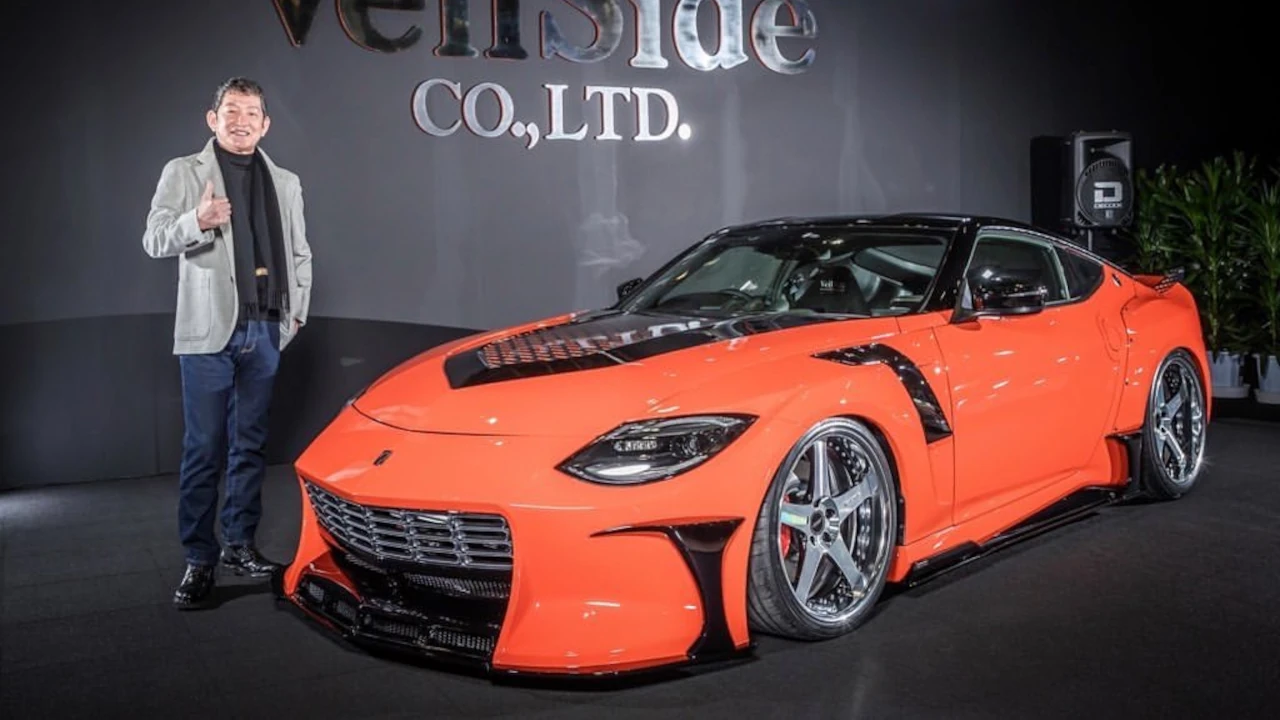
Jakarta – Japanese tuning legend Hironao Yokomaku, the founder and chief designer of VeilSide, is set to bring his decades-long automotive legacy to Indonesia Modification and Lifestyle Expo, or IMX, 2026.
The appearance will give Indonesian car enthusiasts a rare opportunity to meet the man whose work helped shape global tuning culture, from record-setting Japanese performance cars to some of the most recognizable vehicles featured in the Fast & Furious franchise.
IMX 2026, themed “Next Gen Culture,” will be held at Halls 1, 2 and 3 of ICE BSD from October 9 to 11.
A Career Built on Speed
Yokomaku’s journey into the automotive world began with an obsession for speed at a young age. He founded VeilSide in 1990, creating a name that reflected his own surname, with “Yoko” meaning side and “Maku” translated as veil.
The company initially built its reputation in Japan’s highly competitive performance car scene during the 1990s.
Yokomaku and VeilSide became associated with drag racing and top-speed projects, earning multiple records in Japan. One of the company’s best-known achievements came with the R-1 StreetDrag R32 Skyline, which reportedly accelerated from 0 to 300 km/h in 13.72 seconds.
But VeilSide was never built around straight-line speed alone.
Yokomaku developed what he described as a “complete package” approach to tuning, combining engine performance with handling and aerodynamic design.
For VeilSide, a modified car needed to deliver more than additional horsepower. The vehicle’s mechanical performance, driving characteristics and visual identity had to work together as a complete concept.
That philosophy helped distinguish VeilSide from tuners that focused primarily on a single area, whether it was engine modifications, racing performance or exterior styling.
From Japan to Hollywood
VeilSide’s influence eventually extended far beyond Japan through Hollywood and the global popularity of the Fast & Furious films.
The company’s creations appeared in several entries in the franchise, helping introduce its distinctive styling to an international audience.
Among the best-known examples was the red Mazda RX-7 associated with Dominic Toretto in the first film. VeilSide also created the Honda S2000 driven by Suki in 2 Fast 2 Furious.
However, one of its most iconic creations was the VeilSide Fortune Mazda RX-7 driven by Han in The Fast and the Furious: Tokyo Drift.
The car’s wide body and dramatic proportions turned it into one of the most recognizable modified vehicles associated with the franchise. Its popularity helped cement VeilSide’s place in automotive pop culture and introduced a new generation of enthusiasts to Japanese tuning.
The Hollywood exposure also showed how the tuning industry could extend beyond motorsport and workshops. Custom-built cars became part of film, entertainment and a broader lifestyle culture.
Still Designing New Projects
Despite VeilSide’s long history, Yokomaku continues to work on new automotive projects.
Among the more recent examples is the custom luxury vehicle project known as the PREMIER4509LIMITED, reflecting his continued interest in combining distinctive design with a complete approach to vehicle customization.
His appearance at IMX 2026 comes as Indonesia’s modification scene continues to gain greater international attention.
Project Director IMX Andre Mulyadi said Yokomaku’s participation was an important moment for the local automotive community.
“The presence of Hironao Yokomaku at IMX 2026 is a great honor and also proof that Indonesia’s modification industry is increasingly being recognized on the global stage,” Andre said.
He described Yokomaku as a “living legend” whose work has inspired car builders around the world, including in Indonesia.
A Rare Meeting for Indonesian Enthusiasts
For visitors, Yokomaku’s arrival will be more than a chance to meet a celebrity from the international tuning world.
His career offers a direct connection to several defining eras of automotive culture, from Japan’s high-performance tuning boom of the 1990s to the global popularity of modified cars through Hollywood.
IMX 2026 will also provide a platform for Indonesian builders and enthusiasts to see how the global modification scene continues to evolve.
As tuning culture increasingly crosses borders through motorsport, social media, entertainment and international events, the presence of figures such as Yokomaku highlights the growing links between Indonesia’s automotive community and the wider global scene.
For many fans, the opportunity to meet the designer behind some of the most memorable cars in Japanese tuning and Fast & Furious history may be one of the standout attractions when IMX 2026 opens in October.