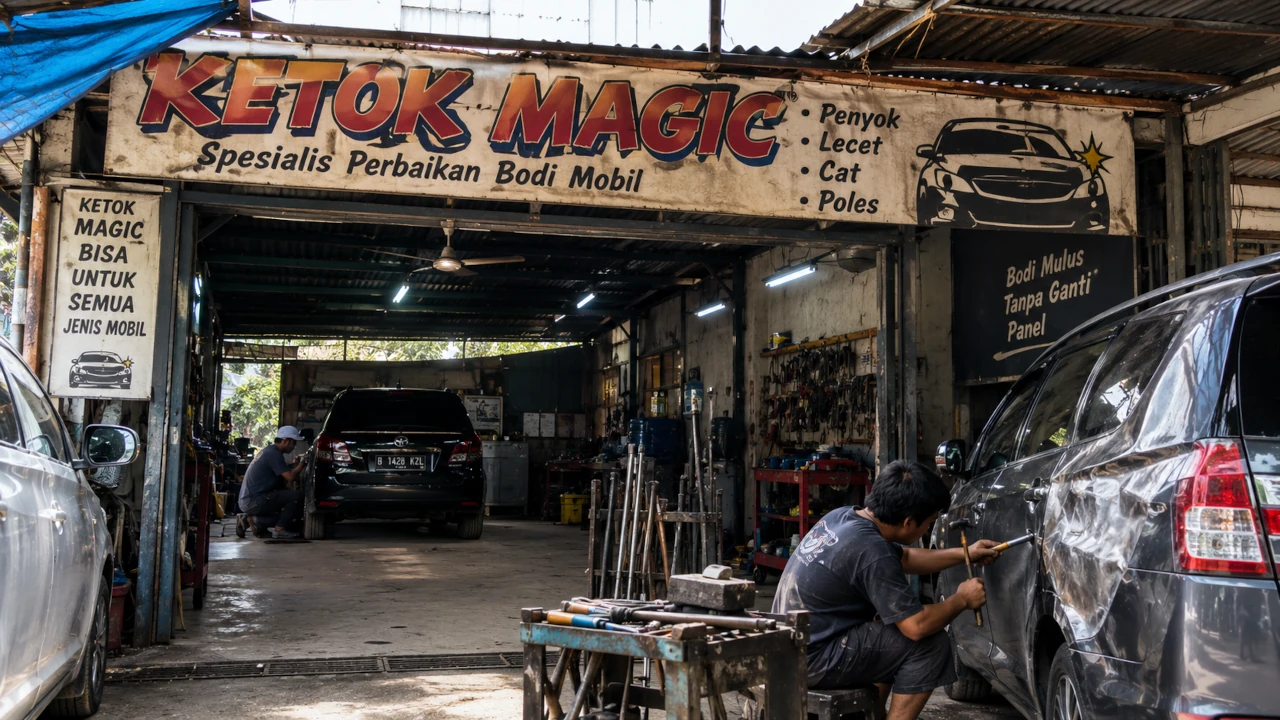
Blitar – Forget Hogwarts. In Indonesia, you don’t need a magic wand to make car dents disappear. Instead, you can visit a workshop known as ketok magic.
The name sounds like something from the wizarding world. However, these workshops offer a real automotive service. Skilled technicians repair dented body panels using specialized hand tools and years of experience.
The unusual name has helped make ketok magic a distinctive part of Indonesia’s automotive culture. More importantly, the technique behind it shows how traditional craftsmanship remains relevant in modern car repair.
What Is Ketok Magic?
Ketok magic is a traditional form of automotive body repair. It focuses on restoring dented metal panels to their original shape.
Technicians use tools such as hammers, metal plates, and specially shaped steel bars. They apply controlled force to reshape damaged panels. The process requires precision because an incorrect strike can make the damage worse.
Unlike its name suggests, the technique does not involve supernatural powers. Instead, the results depend on the technician’s experience, tools, and understanding of metal.
For suitable damage, this method can also reduce the need for extensive panel replacement. Some repairs may preserve the original paint. However, that depends on the depth of the dent and the condition of the paintwork.
The Story Behind Indonesia’s ‘Magic’ Workshops
The roots of ketok magic are commonly traced to Blitar, East Java. The technique is associated with Ahmad Kaselan, better known as Mbah Turut.
He developed a traditional repair method known as kenteng teter. The technique uses metalworking tools to reshape damaged vehicle panels.
Over time, the practice spread beyond Blitar. Skilled workers established workshops in other Indonesian cities, helping the method reach a wider audience.
But how did the word magic enter the name?
One account traces it to a workshop in Yogyakarta during the 1970s. According to a historical report, a foreign visitor was amazed by the restored condition of a damaged motorcycle fuel tank. He reportedly described the result as “magic.”
The expression caught on. Eventually, the name ketok magic became widely associated with this type of repair service.
The story gives the trade an unusual identity. It also explains why the name continues to intrigue people unfamiliar with Indonesia’s automotive culture.
No Wands, Just Skill and Precision
Behind the mysterious branding, ketok magic relies on practical metalworking skills.
First, technicians assess the damaged panel and determine how to access the affected area. They then use appropriate tools to gradually restore its shape.
The work requires a careful balance of force and control. A technician must understand where to apply pressure and how the metal will respond.
The process also varies according to the damage. A shallow dent may require relatively simple treatment. However, severe deformation can demand additional work, dismantling, or refinishing.
That is why results can differ between workshops. Experience and workmanship remain important factors.
Furthermore, modern vehicles can present additional challenges. Their body structures may use different materials, while sensors and other electronic components can complicate repairs.
Owners should therefore choose a workshop with the right skills for their vehicle and the specific damage.
A Unique Part of Indonesia’s Automotive Culture
Ketok magic is more than an unusual name on a workshop sign. It represents a repair tradition built around practical knowledge, manual skill, and experience.
The approach may look mysterious to someone watching a damaged panel become smooth again. Yet the real achievement lies in the technician’s ability to reshape metal with precision.
In an era of advanced body shops and increasingly sophisticated vehicles, this traditional craft still has a place. Its suitability, however, depends on the type of damage and the vehicle’s construction.
So, forget Hogwarts. Indonesia has its own kind of automotive magic.
There are no spells or enchanted tools. Just skilled hands, carefully chosen tools, and a dent that may not look so permanent after all.