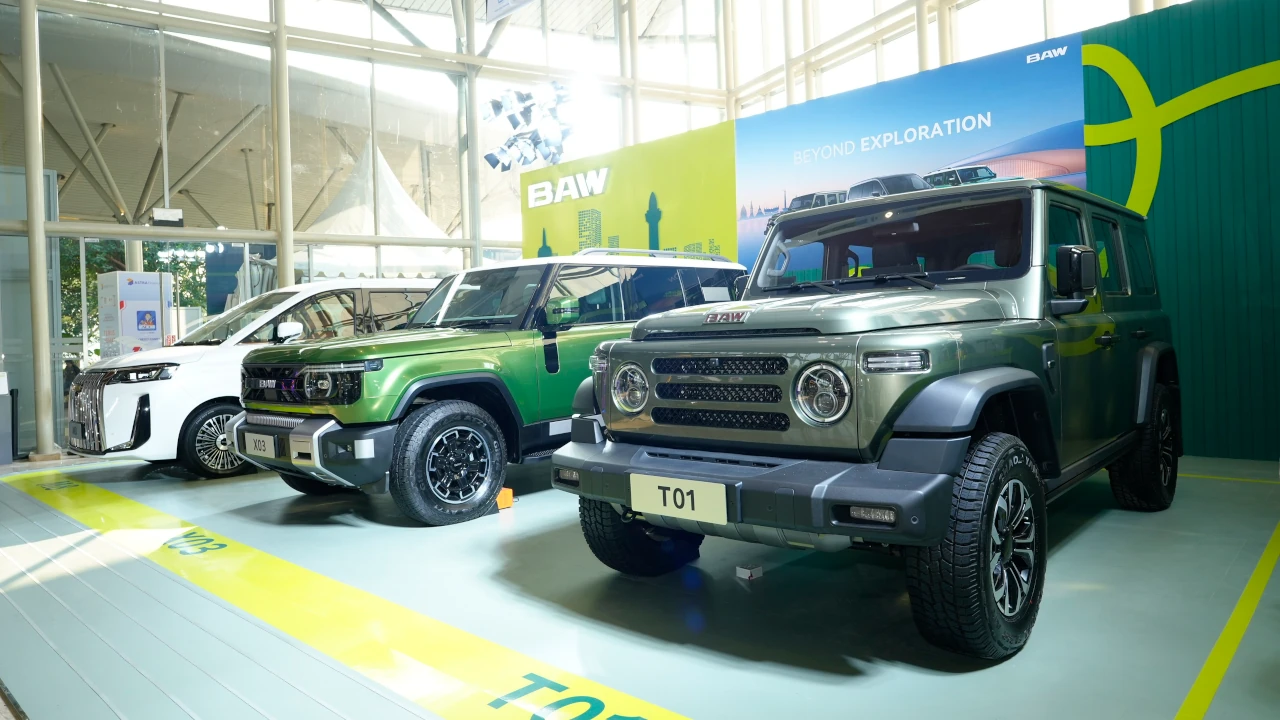
Jakarta – Beijing Automobile Works, or BAW, is expanding its presence in Indonesia with plans to produce its vehicle lineup locally. Behind the automotive brand is Shandong Weiqiao Pioneering Group, a major Chinese industrial group whose businesses extend beyond vehicle manufacturing.
The connection between BAW and Weiqiao provides additional context for understanding BAW Indonesia and its development plans. Weiqiao operates across several industrial sectors, including aluminum, textiles, energy, and automotive manufacturing.
In 2026, Weiqiao ranked 156th in the Fortune Global 500, moving up 10 positions from the previous year. The group has remained on the list for 15 consecutive years.
Weiqiao reported revenue of US$82.3 billion in 2025 and has more than 100,000 employees globally. Its scale provides the broader industrial background behind BAW as the automotive brand develops its business in Indonesia.
Weiqiao Brings a Broader Industrial Background to BAW
Weiqiao’s business portfolio covers several stages of industrial production. Its activities include textiles, fabric dyeing and finishing, clothing, home textiles, power generation, aluminum, and automotive manufacturing.
The group’s businesses include Weiqiao Textile, China Hongqiao Group Limited, and Weiqiao Automotive Technology Group.
This industrial background is relevant to BAW because Weiqiao’s automotive strategy is connected to its experience in materials and manufacturing. The group has highlighted areas such as lightweight materials, production processes, manufacturing digitalization, and recycling.
These activities provide a wider context for understanding the development of Weiqiao’s automotive operations.
Weiqiao Became BAW’s Parent Group in 2023
Weiqiao became the parent group of BAW in 2023. The move brought the automotive brand into a business group with operations covering multiple areas of industrial production.
In 2024, Weiqiao established Shandong Weiqiao New Energy Automobile Technology Group as an entity responsible for managing the group’s automotive business.
The development indicates that automotive manufacturing forms part of a broader industrial strategy rather than operating as an isolated business within the group.
Weiqiao’s automotive activities cover several stages, from materials and components to vehicle development and services.
From Aluminum and Components to Vehicle Manufacturing
At a Shandong Provincial Government press conference on August 20, 2025, a Weiqiao representative explained that the group’s automotive business covers aluminum production, component processing, vehicle design and manufacturing, sales and services, as well as vehicle dismantling and recycling.
The approach places materials and resource utilization alongside vehicle manufacturing.
Lightweight materials are particularly relevant to automotive development because reducing vehicle weight can influence efficiency and overall vehicle engineering. For Weiqiao, its existing aluminum operations provide an industrial foundation that can be connected to its automotive activities.
The group is also focusing on the use of technology and digitalization in manufacturing. Recycling forms another part of the broader automotive business model described by the company.
For BAW Indonesia, this background helps explain the industrial group supporting the brand as it develops its market presence.
BAW Prepares for Local Production in Indonesia
BAW’s Indonesian business is being developed through PT BAW Automobile Trading Indonesia, which is based at Menara Prima Mega Kuningan.
According to Tocy Tang, President Director of PT BAW Automobile Trading Indonesia, the company signed an agreement on July 31, 2026, to produce its entire vehicle lineup in Indonesia.
The agreement forms part of BAW’s plan to develop its activities in the Indonesian market.
Local production would represent an important step in the development of BAW Indonesia. Instead of relying solely on imported vehicles, the brand would establish a manufacturing pathway within the Indonesian automotive industry.
The plan also places BAW within a market where local vehicle production has become an important part of the strategies of global and Chinese automotive companies.
What Weiqiao Means for BAW in Indonesia
Understanding Weiqiao adds another layer to the story of BAW’s expansion.
BAW is an established automotive name, but its current development is taking place within a much larger industrial group. Weiqiao’s businesses in aluminum, components, manufacturing, and recycling create a broader industrial context for the automotive operation.
That connection could also be relevant as BAW develops its local manufacturing plans. The group already operates across parts of the industrial value chain that intersect with vehicle production.
However, the specific products, manufacturing facilities, investment values, and production volumes planned for Indonesia were not detailed in the information provided.
For now, the July 31, 2026 agreement marks a stated step toward local production, while BAW’s Indonesian operations continue to develop.
BAW’s Next Chapter in Indonesia
BAW’s expansion gives the Indonesian automotive market another example of a Chinese vehicle brand entering the country with support from a diversified industrial group.
Weiqiao’s position across aluminum, textiles, energy, manufacturing, and automotive operations provides important context for understanding the company behind BAW.
For BAW Indonesia, the next stage will center on developing its local business and implementing its plan to produce its vehicle lineup in Indonesia.
The combination of BAW’s automotive heritage and Weiqiao’s industrial resources creates a different starting point for the brand’s Indonesian expansion. As local production plans progress, the development of BAW will provide another case study in how Chinese automotive companies are building manufacturing operations beyond their domestic market.