

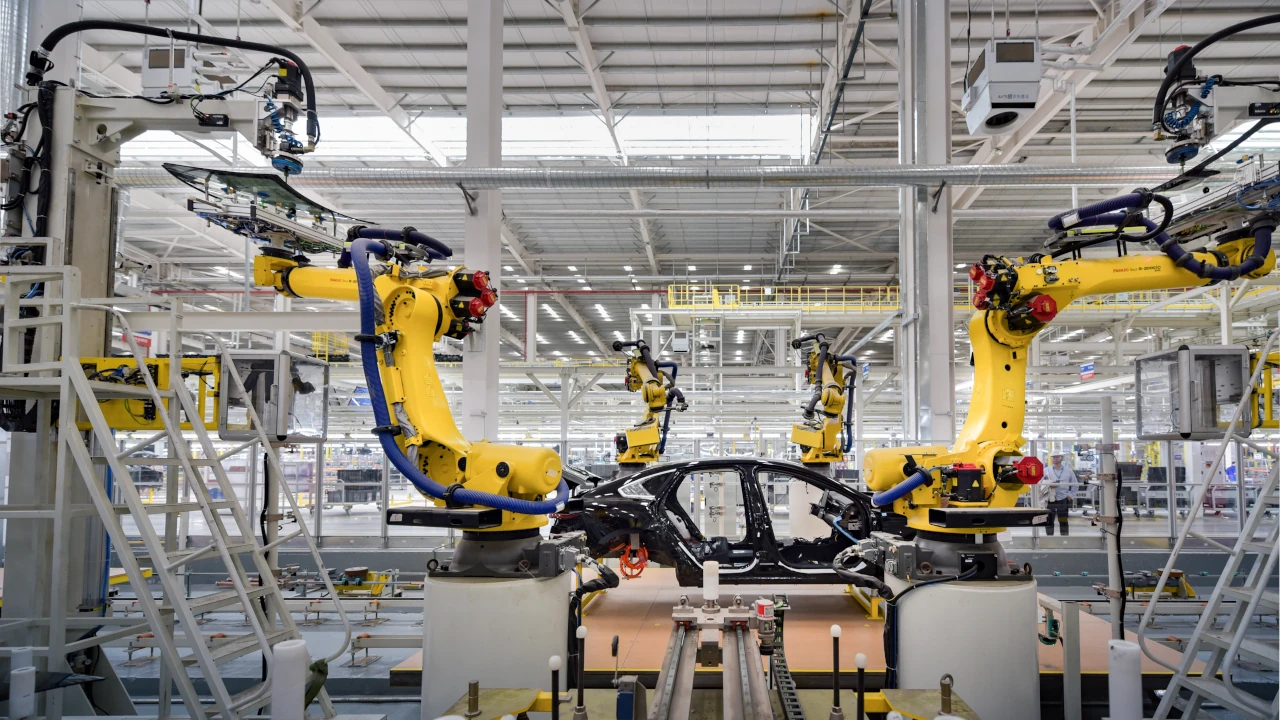
Subang – BYD is strengthening its presence in Indonesia as the Chinese automaker expands its electric vehicle manufacturing strategy in one of Southeast Asia’s largest automotive markets. The company’s local factory is expected to play an important role in supporting production, distribution, and the broader development of its electric vehicle business in the country.
The move reflects the growing importance of Indonesia for global EV manufacturers. With demand for electric vehicles continuing to develop and the government encouraging investment in local manufacturing, establishing production facilities can give automakers greater flexibility while also creating opportunities to build a stronger domestic automotive ecosystem.
BYD’s decision to develop manufacturing capabilities in Indonesia is also closely connected to its wider regional strategy. Rather than relying entirely on imported vehicles, local production allows the company to establish a deeper connection with the Indonesian market and potentially use the country as part of its broader manufacturing network.
Building a Local Manufacturing Base
The development of a BYD manufacturing plant represents a significant step beyond simply selling electric vehicles in Indonesia. A local factory can support the company’s efforts to increase production capacity while strengthening its relationship with suppliers, logistics providers, workers, and other businesses involved in the automotive industry.
For Indonesia, the investment also has a broader significance. Automotive manufacturing has traditionally been an important contributor to the country’s industrial sector, and the transition toward electrification is creating a new set of opportunities for manufacturers and component suppliers.
Electric vehicle production requires different technologies and components compared with conventional internal-combustion vehicles. Battery systems, electric motors, electronic control systems, software, and other high-voltage components are becoming increasingly important parts of the automotive supply chain.
The arrival of a major EV manufacturer therefore has the potential to encourage further development of local capabilities. It could also create opportunities for Indonesian companies to become more involved in the emerging electric vehicle supply chain.
Why Indonesia Matters to BYD
Indonesia offers several characteristics that make it an important market for electric vehicle manufacturers. The country has a large domestic automotive market, a sizeable population, and an expanding interest in electrified mobility.
At the same time, Indonesia is positioning itself as a potential production hub for electric vehicles and their components in Southeast Asia. The country has significant natural resources used in battery production and has been seeking to attract investment into downstream industries.
For BYD, establishing a manufacturing presence provides an opportunity to participate more deeply in this transformation. Local production can potentially reduce the company’s dependence on imported vehicles while giving it greater control over its supply and production operations.
The factory could also become part of BYD’s longer-term efforts to expand its footprint in the region. Southeast Asia has become an increasingly competitive market for electric vehicles, with manufacturers from China, Japan, South Korea, Europe, and other regions introducing new models and investing in local operations.
More Than Just an Assembly Plant
The significance of BYD’s factory goes beyond the physical facility itself. The development of local manufacturing infrastructure can become an important foundation for the company as it expands its product portfolio and increases its presence among Indonesian consumers.
A manufacturing operation also requires supporting infrastructure, trained personnel, quality-control systems, logistics networks, and relationships with suppliers. These elements can gradually create a wider ecosystem around the factory.
For Indonesia, the challenge will be ensuring that the growth of EV manufacturing is accompanied by greater participation from domestic industries. The deeper local suppliers can become involved in the production ecosystem, the greater the potential economic impact of new EV investments.
The transition also requires new skills. Electric vehicles involve technologies that differ significantly from conventional vehicles, meaning manufacturers and suppliers need workers with expertise in battery systems, electrical engineering, software, electronics, and high-voltage safety.
A New Chapter for Indonesia’s EV Industry
BYD’s manufacturing expansion comes at a time when Indonesia’s automotive industry is undergoing a major technological shift. Electric vehicles are gradually becoming a larger part of the market, while manufacturers are exploring different approaches to local production and supply-chain development.
For BYD, the Indonesian factory can serve as an important foundation for its next phase of growth. For Indonesia, the investment represents another step in the effort to move from being primarily a market for finished vehicles toward becoming a more important part of the global electric vehicle manufacturing ecosystem.
As competition in the EV sector becomes increasingly intense, the ability to manufacture locally could become an important advantage. BYD’s growing manufacturing presence therefore signals that Indonesia is no longer simply a destination for electric vehicle sales, but is increasingly becoming part of the production strategy for global EV players.