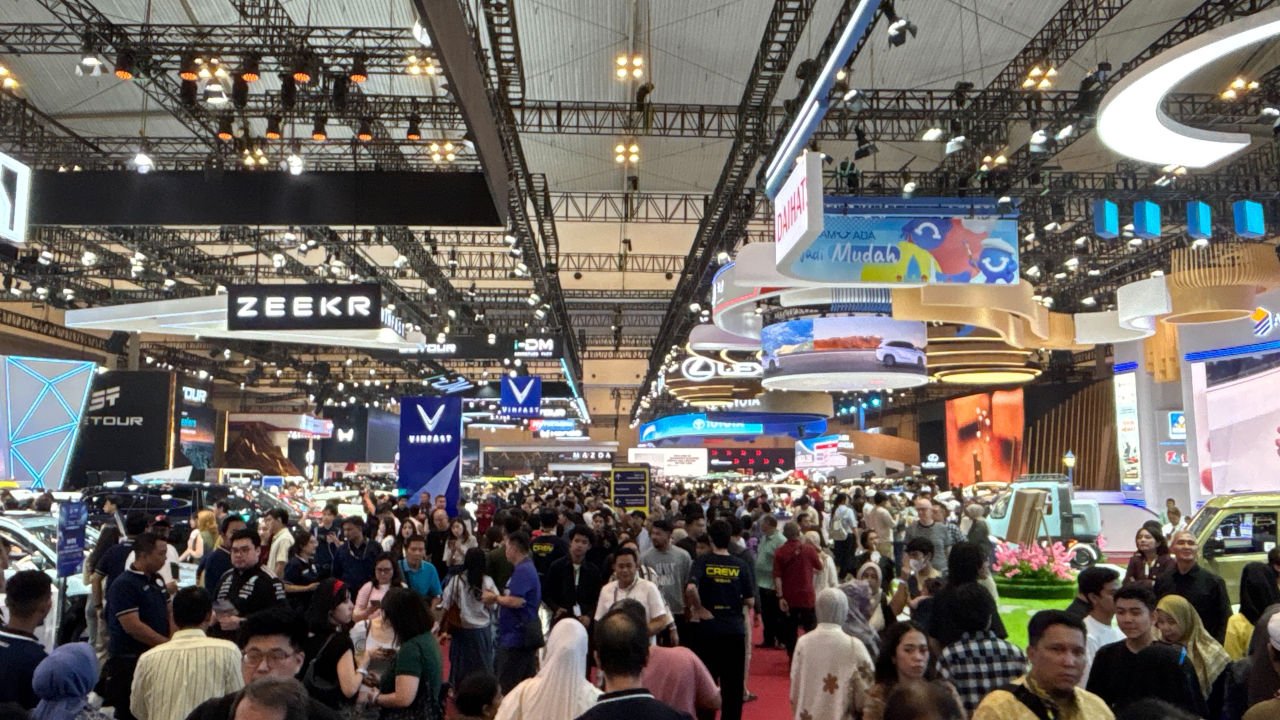
Chinese automakers are steadily reshaping Indonesia’s automotive market, although Japanese brands remain firmly in control of overall sales. Data from the Indonesian Automotive Industry Association (GAIKINDO) shows that Chinese brands accounted for 18 percent of Indonesia’s wholesale car market during the first half of 2026, up from around 12 percent a year earlier.
The shift is significant because Japan’s automotive manufacturers have dominated Indonesia for decades. Toyota, Daihatsu, Suzuki and Mitsubishi Motors continued to occupy the top positions in the national market during January-June 2026, but Chinese manufacturers are increasingly appearing alongside them in the sales rankings.
GAIKINDO recorded 436,564 wholesale vehicle sales in Indonesia during the first six months of 2026, an increase of 15.9 percent from the same period last year. Chinese brands collectively accounted for 78,622 units, representing a 73.4 percent year-on-year increase.
Toyota Still Leads, but BYD Breaks Into the Top Five
The overall market leader remains Toyota. The Japanese automaker distributed 133,928 vehicles during the first half of 2026, giving it a 30.7 percent share of Indonesia’s wholesale market.
Daihatsu followed with 73,545 units, while Suzuki recorded 36,319 units. Mitsubishi Motors ranked fourth with 32,588 units.
What makes the latest ranking more interesting is the appearance of BYD in fifth place.
The Chinese EV manufacturer recorded 23,257 wholesale units during the first six months of the year, giving it a 5.3 percent market share. That was enough to move BYD ahead of Honda, which recorded 20,673 units and held a 4.7 percent share.
The development is notable because Honda has traditionally been one of the strongest Japanese passenger-car brands in Indonesia. Its position below BYD shows how quickly the competitive landscape is changing, particularly as electrified vehicles become more prominent.
Jaecoo Adds More Pressure From China
BYD is not the only Chinese manufacturer making an impact.
Jaecoo recorded 17,334 wholesale units during the first half of 2026, placing the brand eighth overall in the national market. The result also made Jaecoo the second-best-selling Chinese brand in Indonesia during the period, according to reported GAIKINDO data.
The brand’s performance is particularly notable given its relatively short presence in the Indonesian market. Its J5 has become an important contributor, helping Jaecoo establish itself among the country’s leading automotive brands despite competing against manufacturers with much longer histories in Indonesia.
Other Chinese brands, including Geely, Wuling and Chery, are also contributing to the broader growth of Chinese vehicle sales.
As a group, the 17 Chinese automakers registered with GAIKINDO delivered 78,622 vehicles during the first half of 2026. Their combined market share increased substantially from the previous year.
Why Chinese Brands Are Gaining Ground
The rise of Chinese automakers is not simply a result of one or two successful models. Their expansion reflects a broader strategy that combines competitive pricing, increasingly sophisticated technology and designs aimed at mainstream consumers.
GAIKINDO’s Head of Market Development, Jongkie Sugiarto, previously pointed to three factors behind the growing popularity of Chinese vehicles: design, technology and pricing.
That combination has become particularly relevant as Indonesian buyers gain access to more electrified vehicles.
Chinese manufacturers have moved aggressively into battery-electric vehicles, hybrids and plug-in hybrids, giving them a product advantage in a market where electrification is becoming increasingly visible.
BYD is a clear example. Its growth has been supported by models positioned across different price points, while the company has also expanded its presence beyond pure battery-electric vehicles.
The result is a growing group of Chinese brands that are no longer competing only as niche EV manufacturers. They are increasingly challenging established brands across several vehicle segments.
Japanese Brands Still Hold the Advantage
Despite the rapid growth of Chinese automakers, the idea that Japanese manufacturers are losing control of Indonesia’s car market would be premature.
Toyota alone sold more than 133,000 wholesale units during the first six months of 2026. Daihatsu, Suzuki and Mitsubishi Motors also remained well ahead of most individual Chinese brands.
Japanese manufacturers also benefit from extensive dealer networks, established after-sales operations, strong brand recognition and long-standing relationships with Indonesian consumers.
The combined strength of these factors means Chinese automakers still have a considerable gap to close before they can seriously threaten Japanese manufacturers at the group level.
However, the direction of the market is becoming harder to ignore.
The Chinese share of Indonesia’s wholesale market rose to 18 percent in the first half of 2026, while the Japanese brands collectively remained dominant with roughly four-fifths of the market.
The important point is therefore not that Chinese brands have overtaken Japan. Instead, they are taking a larger portion of a market that was previously much more difficult for new entrants to penetrate.
EVs Could Accelerate the Shift
Electrification may become one of the biggest factors determining how quickly this balance changes.
Chinese automakers have invested heavily in EV technology and supply chains, allowing them to bring a growing number of electric models into international markets. That strategy is also visible in Indonesia, where Chinese manufacturers are increasingly associated with EVs and hybrid vehicles.
GAIKINDO data cited by local automotive media showed that Indonesia’s wholesale EV sales reached 69,739 units during January-July 2026, up 80.8 percent from the same period a year earlier. BYD led the segment with 21,432 units and a 30.73 percent share.
That growth gives Chinese manufacturers an opportunity to build market share in a part of the automotive industry that is still developing in Indonesia.
At the same time, Japanese automakers are responding with their own hybrid and electrified products, meaning the competition is unlikely to remain one-sided.
The Market Is Becoming More Competitive
Indonesia’s automotive market is therefore entering a more competitive phase. Japanese manufacturers still have the advantage in overall volume, but Chinese brands are expanding faster and increasingly appearing in positions once dominated almost exclusively by established players.
BYD’s move into the top five and Jaecoo’s appearance in the top 10 are two of the clearest examples.
For consumers, the changing landscape means more choices across price ranges and powertrain types. For automakers, it means that brand loyalty alone may no longer be enough to protect market share.
China’s carmakers still have a long way to go before they can overturn Japan’s dominance in Indonesia. But with Chinese brands already accounting for 18 percent of the market and growing at more than 70 percent annually, their challenge to the established order is becoming increasingly difficult to ignore.