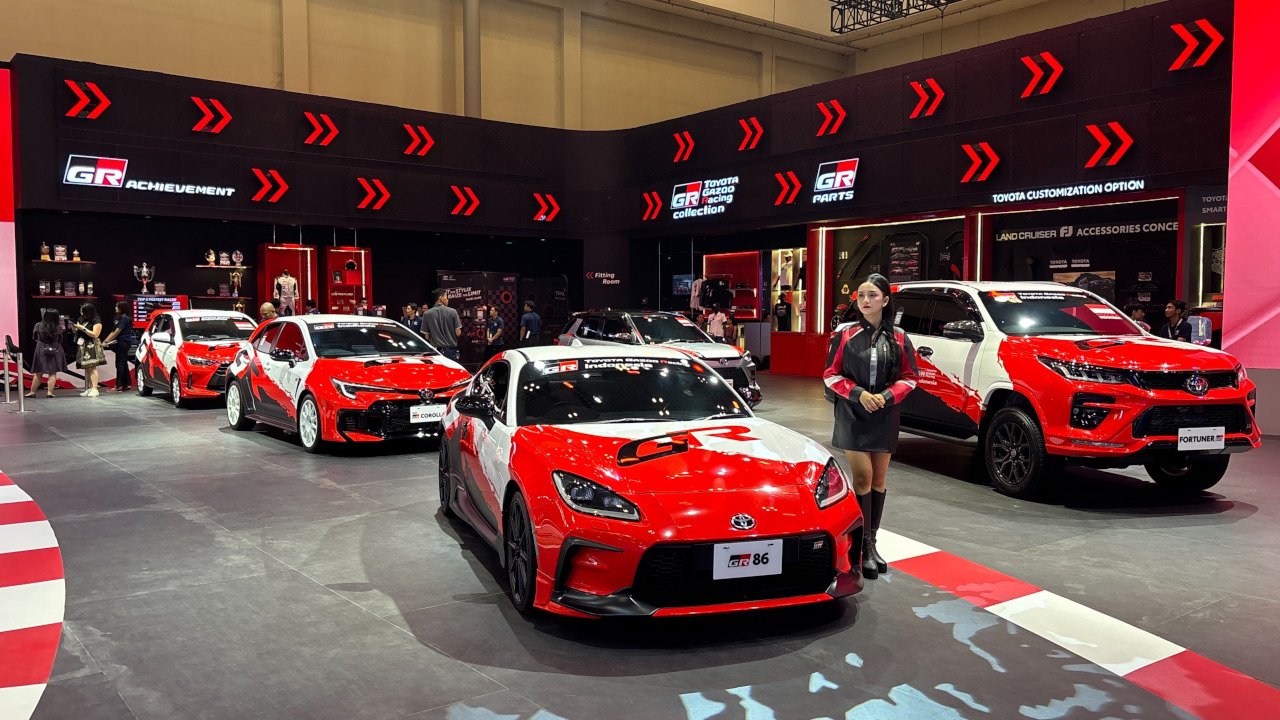
Jakarta – Toyota continues to dominate Indonesia’s automotive market in 2026, but the latest sales rankings show that the gap between established Japanese brands and Chinese automakers is becoming increasingly interesting.
Based on the latest wholesales data from the Indonesian Automotive Industry Association (GAIKINDO), total vehicle distribution in Indonesia reached 517,742 units during January-July 2026. That represents an 18.3 percent increase compared with 437,544 units during the same period last year.
Toyota remained the country’s best-selling automotive brand, with 155,574 units distributed during the first seven months of the year. The figure gives Toyota approximately 30 percent of the national market, keeping it well ahead of every other individual brand.
However, the biggest story in the latest ranking is the rise of BYD. The Chinese automaker has moved rapidly through Indonesia’s sales rankings, putting additional pressure on brands that have traditionally occupied the top positions.
Top 10 Car Brands in Indonesia, January-July 2026
The latest GAIKINDO data shows the following brands among the leading players in Indonesia’s automotive market:
- Toyota – 155,574 units
- Daihatsu – 87,849 units
- BYD – 29,826 units
- Mitsubishi Motors – 29,226 units
- Suzuki – 27,896 units
- Honda – 23,260 units
- Mitsubishi Fuso – 21,572 units
- Isuzu – 18,753 units
- Jaecoo – 17,334 units
- Hyundai – 16,490 units
The ranking highlights a market that remains heavily influenced by Japanese manufacturers, but is no longer exclusively controlled by them.
Toyota and Daihatsu occupy the first two positions by a considerable margin. Together, the two brands account for a substantial portion of Indonesia’s total vehicle distribution.
The situation becomes more competitive from third place onward.
BYD Moves Into the Top Three
BYD has become one of the most significant disruptors in Indonesia’s car market. The Chinese automaker recorded 29,826 units during January-July, narrowly ahead of Mitsubishi Motors at 29,226 units.
That means the gap between BYD and Mitsubishi Motors was only 600 units after seven months.
The development is particularly notable because BYD has built much of its presence around electrified vehicles. Its growing sales suggest that demand for Chinese-made EVs is no longer limited to a small group of early adopters.
BYD’s performance also follows a strong July. The brand recorded 6,569 wholesales units during the month, placing third in the monthly ranking behind Toyota and Daihatsu. Mitsubishi Motors followed with 6,143 units.
This puts BYD in a position where it is competing directly with established Japanese manufacturers rather than simply operating as a niche EV brand.
Suzuki and Honda Face a More Competitive Market
Suzuki ranked fifth through July with 27,896 units, followed by Honda at 23,260 units.
Honda’s position is particularly noteworthy because the Japanese manufacturer has historically been one of the strongest passenger-car brands in Indonesia. The emergence of BYD and other Chinese manufacturers means the competitive environment is becoming more challenging for established players.
The pressure is not coming from BYD alone.
Jaecoo ranked ninth with 17,334 units during the first seven months. The brand has established itself relatively quickly in Indonesia, helped by demand for its J5 and its positioning in the growing electrified vehicle segment.
Jaecoo also recorded 3,200 units in July, putting it ahead of Honda’s 2,587 units for the month in the latest wholesales ranking.
July Shows How Fast the Market Is Changing
The July figures provide another indication of the changing competitive landscape.
Indonesia’s total wholesales reached 81,115 units in July, up 4.5 percent from June. Retail sales also increased, reaching 77,412 units, a 3.6 percent monthly increase.
Toyota remained comfortably ahead with 21,642 wholesales units in July, while Daihatsu followed with 14,153 units.
BYD’s 6,569 units placed it third for the month, ahead of Mitsubishi Motors and Suzuki. Jaecoo also made the top 10 with 3,200 units, while Geely recorded 1,965 units.
The monthly figures suggest that Chinese brands are becoming more visible not only in individual vehicle segments but also in the overall brand rankings.
Japanese Brands Still Have a Major Advantage
Despite the rapid growth of Chinese manufacturers, Japan’s automotive brands remain firmly in control of Indonesia’s overall market.
Toyota’s 155,574 units are more than five times BYD’s cumulative sales through July. Daihatsu also maintains a substantial lead over the brands fighting for third place.
Japanese automakers also benefit from decades of presence in Indonesia, extensive dealer networks, established after-sales operations and strong consumer familiarity.
Those advantages are difficult for newer brands to replicate in a short period.
However, sales rankings are increasingly showing that Chinese automakers are closing some of the historical gap.
EVs Are Changing the Competitive Landscape
One reason Chinese brands have been able to gain ground is their strong focus on electrified vehicles.
BYD has built a broad EV lineup in Indonesia, while other Chinese manufacturers such as Jaecoo, Geely, Chery and Wuling have also introduced electrified models.
The strategy comes as Indonesia’s EV market continues to expand. Chinese manufacturers have been able to use their experience in electric vehicle development to enter the market with products covering several price points and vehicle categories.
This does not mean traditional Japanese brands are standing still. Toyota, Suzuki and other established manufacturers have also expanded their hybrid offerings, while several companies are preparing additional EV products for the Indonesian market.
The competition is therefore moving beyond a simple battle between Japanese and Chinese brands. It is increasingly becoming a contest over technology, pricing, product variety and the ability to build long-term customer confidence.
Toyota Remains the Benchmark
For now, Toyota remains the clear benchmark in Indonesia.
Its 155,574-unit performance through July puts it comfortably at the top, while Daihatsu holds second place with 87,849 units. The more interesting battle is happening behind them, where BYD has moved into third and is separated from Mitsubishi Motors by only a few hundred units.
With five months of 2026 still remaining, the rankings could change further.
If BYD maintains its current momentum, the Chinese automaker could strengthen its position among Indonesia’s largest car brands. At the same time, Jaecoo and other Chinese manufacturers could continue moving up the table.
The bigger picture is clear: Toyota still owns the Indonesian car market, but the brands competing behind it are changing rapidly.