

Jakarta – Hongqi has spent more than six decades building an identity that is closely connected to China’s modern history. What began in 1958 as a marque associated with important state occasions is now evolving into a modern luxury automotive brand, bringing its interpretation of Chinese identity to a new generation of customers.
For generations, Hongqi vehicles were used during state receptions, official ceremonies, and important diplomatic occasions. That history gave the brand a distinctive position within China’s automotive landscape, but the meaning of luxury has changed significantly as technology, consumer expectations, and lifestyles have evolved.
Today, Hongqi is attempting to carry its heritage into a different era rather than simply reproducing its past. The brand’s approach is increasingly centered around what it calls Neo-Chinese Luxury, combining elements of Chinese philosophy, aesthetics, technology, and contemporary automotive design.
The transformation is particularly relevant as Chinese car manufacturers expand beyond their domestic market. Rather than competing solely through technology or pricing, brands such as Hongqi are also looking for ways to establish distinctive identities in international markets.
A Heritage Built Around National History
Hongqi’s story began in 1958, when the brand became associated with some of the most important official events in China. Its vehicles were used for state receptions and ceremonial occasions, creating an image that was fundamentally different from that of an ordinary passenger car manufacturer.
This background became part of Hongqi’s identity for decades. The brand represented prestige and authority, while its vehicles occupied a highly symbolic position within China’s automotive industry.
However, preserving such a heritage in a modern automotive market presents a challenge. A brand cannot rely indefinitely on historical associations when customers increasingly evaluate luxury vehicles based on design, technology, comfort, personalization, and the overall ownership experience.
Hongqi’s response has been to reinterpret its heritage rather than abandon it.
From Heritage to Neo-Chinese Luxury
Hongqi began a new phase of transformation in 2018, developing a more contemporary design language while maintaining elements of its Chinese identity.
One of the initiatives supporting this direction is the Hongqi–Palace Museum Joint Innovation Laboratory. The collaboration brings Hongqi designers together with experts from the Palace Museum to explore how Chinese culture and aesthetics can be translated into modern industrial design.
The objective is not simply to place traditional Chinese decorative elements on a vehicle. Instead, Hongqi’s approach looks at deeper ideas such as balance, proportion, the relationship between people and space, symbolism, and attention to detail.
One principle referenced by the brand is Taihe (太和), associated with harmony and balance. In the context of Hongqi’s design philosophy, the concept provides a foundation for creating modern luxury products that are intended to feel cohesive rather than simply elaborate.
This forms part of the thinking behind Neo-Chinese Luxury. Luxury, in this interpretation, does not necessarily depend on visual extravagance. It can also be expressed through carefully selected materials, a calm interior environment, thoughtful details, and technology that supports the user without dominating the experience.
The E-HS9 as a Modern Expression
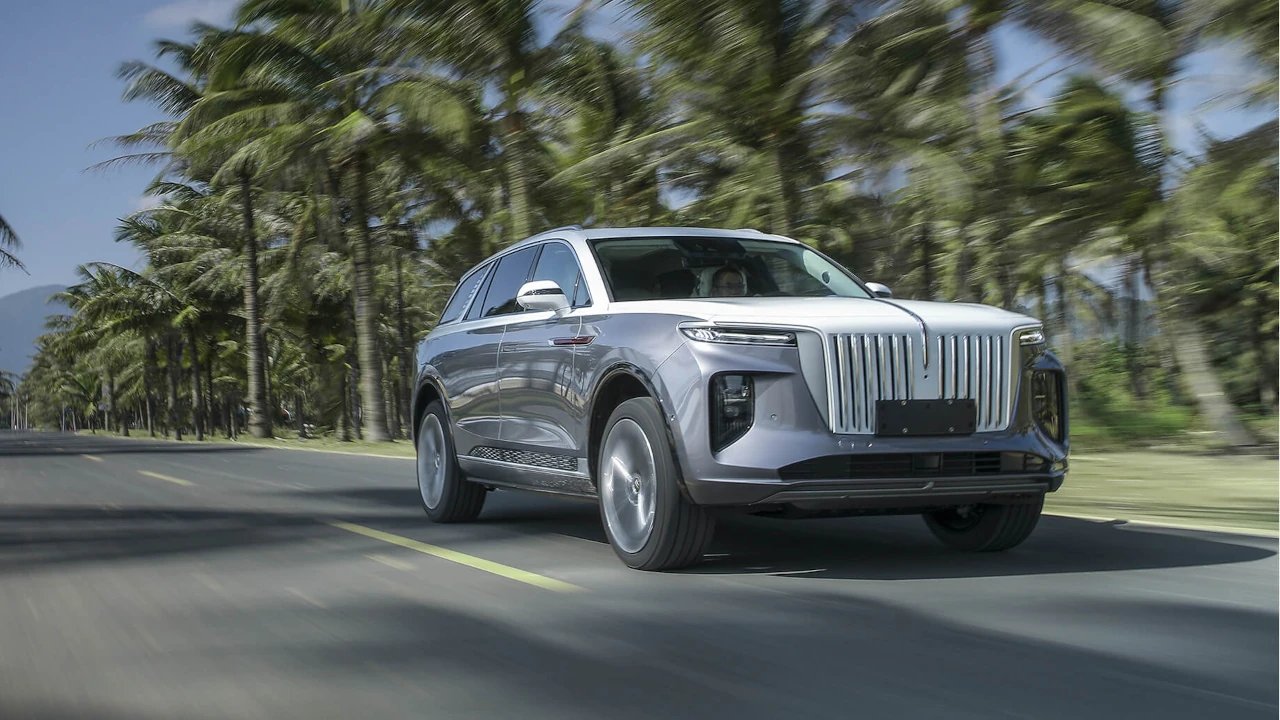
Hongqi E-HS9 provides one example of how this philosophy is being translated into a contemporary vehicle.
The full-size electric SUV has been introduced in Indonesia with a six-seat 2+2+2 configuration. Its exterior presents a strong and distinctive appearance, while the interior focuses on space, comfort, design balance, and the integration of modern technology.
The E-HS9 also reflects Hongqi’s broader transition into electric mobility. Rather than treating electrification purely as a technological change, the brand is using it as an opportunity to rethink how luxury can be experienced in a modern vehicle.
For Hongqi, technology is intended to make the journey easier and more intuitive rather than becoming the sole focus of the experience. The same principle applies to its interpretation of luxury, where the value of a vehicle is not determined only by what can be seen on a specification sheet.
This approach places greater emphasis on how occupants experience the cabin and how the vehicle fits into their lifestyle.
Entering Indonesia With a Different Identity
Hongqi’s evolution is now extending into Indonesia through its partnership with Indomobil Group. The brand has introduced its identity and products to Indonesian consumers, with the E-HS9 serving as one of its key models in the market.
The Indonesian market is becoming increasingly competitive for premium and electric vehicles. Consumers have more choices than before, including established luxury manufacturers and newer Chinese brands entering the premium segment.
For Hongqi, this creates a challenge that goes beyond product specifications. The brand needs to communicate why its interpretation of luxury is different and why its Chinese heritage is relevant to Indonesian customers.
Andrew Nasuri, Director of Indomobil Group, said Hongqi’s history is closely linked to important moments in China’s leadership and that the significance of this heritage lies in how its values can remain relevant today.
Through Neo-Chinese Luxury, Hongqi aims to bring ideas such as calmness, attention to detail, and confidence in its own identity into a more personal luxury experience for Indonesian customers.
The strategy suggests that Hongqi does not want its history to remain something that exists only in museums or historical photographs. Instead, the brand is attempting to turn that heritage into a living part of its modern products and customer experience.
Building a Luxury Experience Beyond the Car
Hongqi’s plans in Indonesia also extend beyond selling vehicles. The brand is preparing to establish its first dedicated home in the country, creating a space where customers can experience the brand, learn about its history and philosophy, explore its vehicles, and interact with Hongqi in a more personal setting.
That development could become an important part of Hongqi’s strategy as it establishes itself in the Indonesian market. For a luxury brand, the showroom and customer environment can be as important as the vehicle itself in communicating its identity.
The move also represents another stage in Hongqi’s partnership with Indomobil Group. After introducing the brand through its philosophy and products, the next step is to build a physical experience around those ideas.
Reinventing Without Losing Its Roots
Hongqi’s transformation illustrates the challenge facing heritage automotive brands in an era of rapid technological change. Its original identity was shaped by a very specific historical role, but its future depends on connecting that heritage with contemporary consumer expectations.
The brand’s answer is not to discard its past. Instead, Hongqi is attempting to reinterpret its history through modern design, electric mobility, technology, and a more personal understanding of luxury.
The E-HS9 represents one expression of that strategy, while the development of its presence in Indonesia signals a broader ambition to introduce the concept of Neo-Chinese Luxury to international customers.
From state ceremonies to electric SUVs, Hongqi’s journey has changed dramatically since 1958. Whether its interpretation of Chinese luxury can establish a lasting position in the increasingly competitive global premium market will depend on how successfully the brand can turn its heritage into an experience that feels relevant to modern customers.