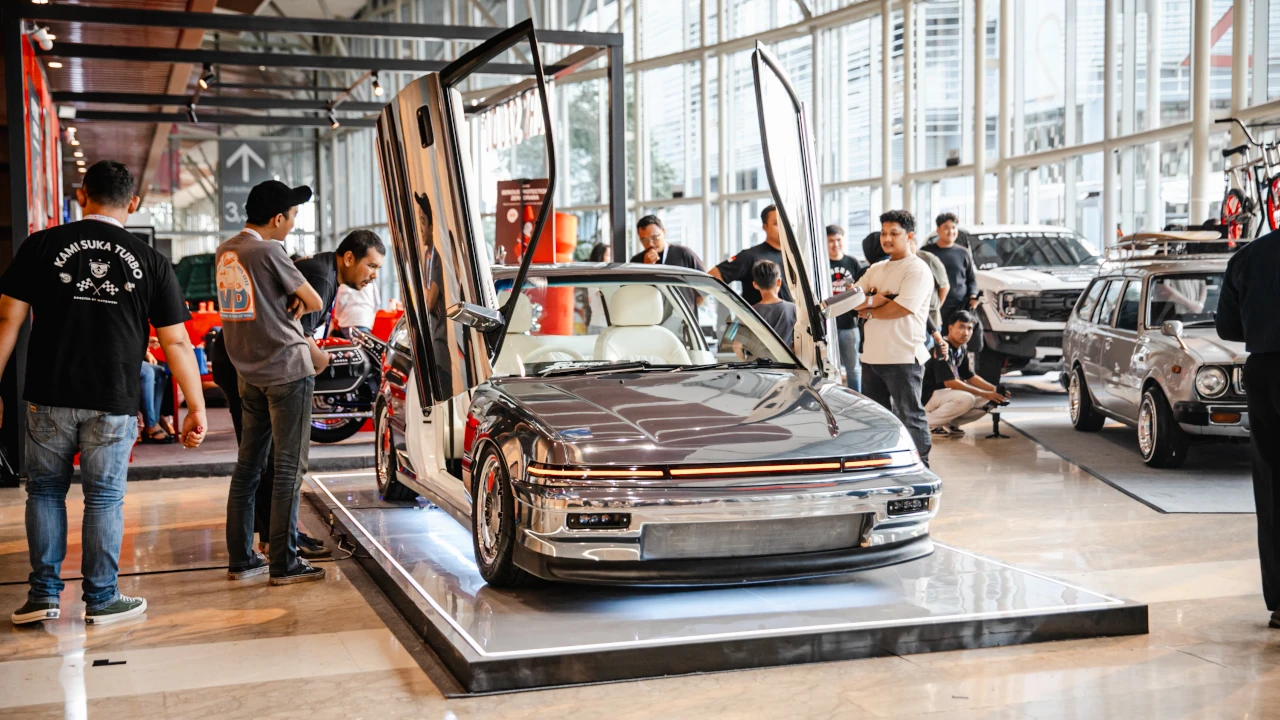
Jakarta – The Honda Civic Super Nouva remains an appealing example of how Japanese cars from the 1990s continue to attract attention in today’s modification scene. Its appearance at Indonesia Modification & Lifestyle Expo (IMX) 2026 in ICE BSD, Tangerang, from October 9 to 11, highlighted the enduring interest in classic hatchbacks and their potential for creative restoration.
This particular Civic Super Nouva features a chrome exterior, scissor doors, and modern lighting. These changes give the classic hatchback a striking new look. At the same time, its original shape remains recognisable.
The project highlights a key part of JDM culture. Enthusiasts can preserve a car’s identity while adding their own style. As a result, older models can appeal to both longtime fans and younger audiences.
Why 1990s Japanese Cars Remain Popular
Japanese cars from the 1990s hold a special place in automotive culture. Many feature compact dimensions, distinctive styling, and a strong enthusiast following. These qualities make them attractive choices for restoration and modification.
Moreover, their designs differ from many modern vehicles. Today’s cars often have larger bodies and more complex styling. In contrast, classic hatchbacks offer simpler proportions and a recognisable character.
For enthusiasts, the appeal goes beyond nostalgia. Owners can personalise their cars with new wheels, suspension setups, paint finishes, and interior upgrades. Each choice helps create a distinct identity.
However, restoring an older car also presents challenges. Parts availability and repair costs can vary. Therefore, owners must consider the vehicle’s condition before starting a project.
Chrome Paint Gives the Civic Nouva a New Identity
The chrome body finish is one of the most striking features of this Civic Super Nouva. Its reflective surface creates a bold appearance. It also sets the car apart from hatchbacks with conventional paint finishes.
Meanwhile, the scissor doors add another visual highlight. They open upwards and create a dramatic display when the car is parked. The extended LED lighting at the front adds a modern touch.
The interior follows a different approach. White upholstery and diamond-pattern details dominate the cabin. A matching dashboard, three-spoke steering wheel, and wood-look accents complete the design.
Together, these features create a contrast between classic proportions and modern custom styling. Nevertheless, they represent a modified interpretation of the original car. They are not part of its factory specification.
This distinction matters to collectors. Some prefer original vehicles, while others enjoy heavily customised builds. Both approaches have a place in classic car culture.
Restoration and Modification Serve Different Goals
Restoration and modification may look similar, but they have different objectives. A restoration usually aims to preserve or recover a car’s original condition. This process can involve body repairs, mechanical work, and interior renewal.
By comparison, modification focuses on personal expression. Owners may change the paint, wheels, suspension, lighting, or cabin design. These changes can give an older model a completely different character.
Neither approach is automatically better. Instead, the right choice depends on the owner’s goals. It also depends on the car’s condition and intended use.
For a show car, visual impact may be the main priority. However, a daily driver needs reliability and practicality. Owners should also consider safety and road regulations before making major changes.
For example, lighting installations and door mechanisms must be suitable for their intended use. Likewise, suspension changes should not compromise safe handling.
IMX 2026 Connects Classic Cars With Modern Culture
The Civic Super Nouva’s appearance at IMX 2026 reflects the connection between classic cars and modern modification trends. Events like this bring enthusiasts together and showcase different approaches to custom builds.
They also introduce older models to new audiences. Younger visitors can discover cars that were popular before they started driving. Meanwhile, longtime enthusiasts can revisit familiar designs through a modern lens.
In this case, the Civic Nouva combines classic hatchback proportions with contemporary styling. The result shows how owners can reinterpret an older car without losing its recognisable shape.
Furthermore, exhibitions provide opportunities to explore new products and restoration techniques. Visitors can compare builds and learn how different modifications affect a car’s appearance.
As a result, classic cars remain part of an evolving automotive scene. Their appeal comes from design, craftsmanship, and the freedom to personalise them.
The Lasting Appeal of 90s JDM Cars
The Honda Civic Super Nouva at IMX 2026 demonstrates that the appeal of 1990s Japanese cars goes beyond nostalgia. Their distinctive designs continue to inspire enthusiasts. At the same time, their potential for customisation creates opportunities for fresh interpretations.
Some owners prefer faithful restorations. Others choose bold finishes and modern features. Either way, the original car provides the foundation for a personal project.
Ultimately, classic JDM models connect different generations of enthusiasts. They preserve an important part of automotive history while remaining relevant to modern modification culture.
The Civic Super Nouva is a clear example. Its familiar hatchback shape, chrome finish, and customised interior show how a classic Japanese car can find a new audience decades after its introduction.