

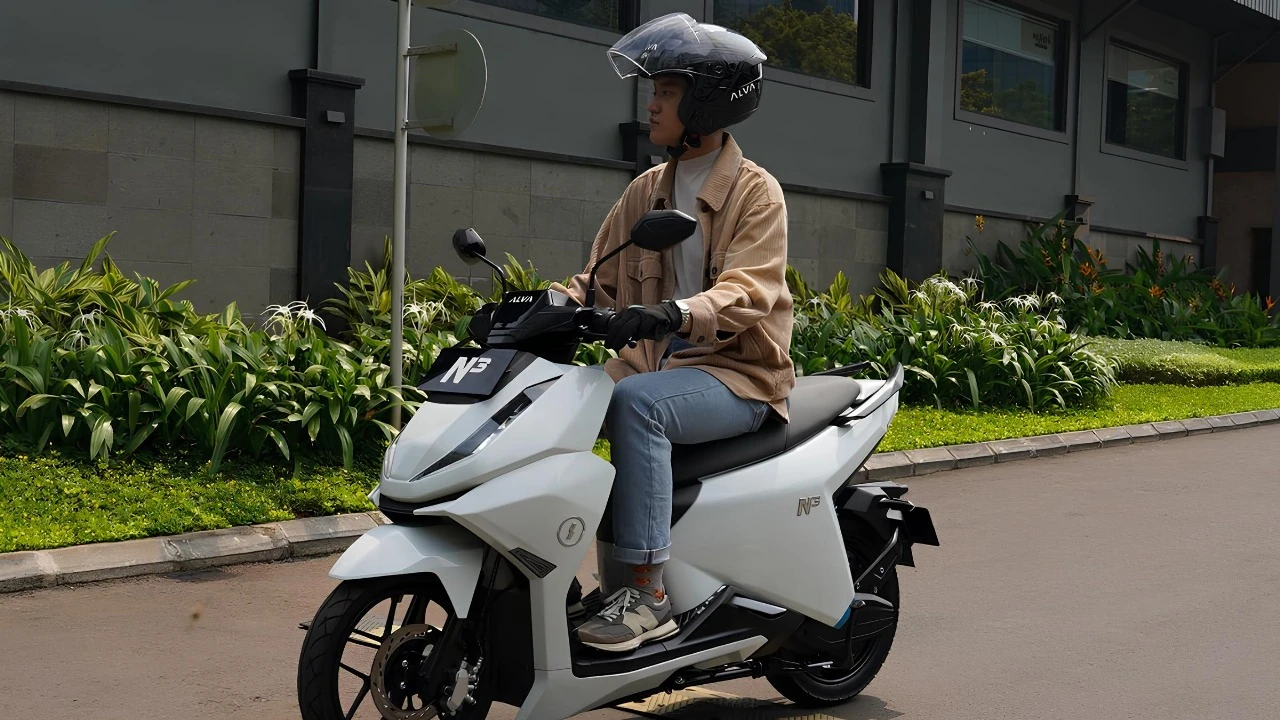
Jakarta – Electric vehicle financing in Indonesia is growing, but that does not mean every segment is moving at the same pace. While cheaper loans could help more consumers buy electric motorcycles, lenders are still facing deeper concerns about the vehicles they are being asked to finance.
According to Indonesia’s Financial Services Authority, or OJK, financing for electric vehicles by multifinance companies grew 34.7 percent year-on-year to Rp24.60 trillion as of June 2026. However, a new report from RMI shows that electric motorcycle financing remains concentrated among a limited number of multifinance companies, while direct involvement from commercial banks is still relatively limited.
The challenge is becoming increasingly important as the Indonesian government puts financing at the center of its national electric motorcycle program, known as Molinas. During the program’s launch on August 13, President Prabowo Subianto said the government would seek lower installment rates and zero-down-payment schemes.
But making financing cheaper may only solve part of the problem. For electric motorcycles to reach a wider market, lenders also need greater confidence in the products, their long-term value, and the ecosystem supporting them.
Three Risks Holding Back Financing
In its report, Mobilizing Electric Two-Wheeler Finance in Indonesia, RMI identified three major risks affecting financing decisions. They are product and technology risk, resale value risk, and uncertainty surrounding market demand and government policies.
Product-related concerns include differences in vehicle quality, battery durability, manufacturer track records, and after-sales support. For lenders, these factors make it more difficult to assess how reliable an electric motorcycle will remain throughout the financing period.
Battery condition presents another challenge. Indonesia’s used electric motorcycle market is still developing, and there is no widely adopted method for assessing battery health when a vehicle is resold.
That creates uncertainty over resale values. Unlike conventional motorcycles, which already have a more established second-hand market, electric motorcycles still lack widely accepted benchmarks that can help determine how much value they will retain after several years of use.
For financing companies, that uncertainty matters. If the future value of an asset is difficult to predict, lenders may become more cautious about the amount they are willing to finance and the terms they offer.
The result could be higher down payments, shorter loan tenors, more selective partnerships with manufacturers, and smaller financing portfolios. This is why lower interest rates alone may not be enough to significantly expand access to electric motorcycle loans.
“Better financing can help more consumers access the benefits of electric motorcycles, but expanding the market will require greater confidence and support from financial institutions,” said Wini Rizkiningayu, Principal at RMI.
Making Electric Motorcycles More Bankable
RMI recommends a broader framework to reduce risks in electric motorcycle financing. The proposed approach includes credit enhancement mechanisms, innovative business models, asset value protection, and stronger market infrastructure.
The goal is not only to make loans cheaper for consumers, but also to make electric motorcycles easier for lenders to evaluate. Better information and clearer standards could help financing companies assess risks more accurately.
The Indonesian Electric Motorcycle Industry Association, or AISMOLI, has also highlighted the importance of making electric motorcycles more bankable. According to its chairman, Budi Setiyadi, affordable financing needs to be supported by stronger confidence in the vehicles themselves.
“Electric motorcycle financing should not only be made cheaper; the products themselves also need to become more bankable,” he said. Warranties, after-sales services, transparency over battery health, and more measurable resale values could all help improve confidence among financing companies.
Those elements could be particularly important as more electric motorcycles enter the second-hand market. A healthier used vehicle ecosystem could make it easier to estimate residual values, which in turn may give lenders more confidence to offer longer and more competitive financing terms.
A Long Road to 13 Million Units
The financing challenge comes as Indonesia aims to have 13 million electric motorcycles on the road by 2030. Data processed by the Ministry of Industry showed that the country had 242,909 electric motorcycles as of April 2026.
The gap between the current population and the 2030 target remains substantial. While lower interest rates and zero-down-payment schemes could make electric motorcycles more attractive, the market will also need stronger foundations to support long-term growth.
Consumers need affordable monthly installments, but lenders also need confidence that the products they finance will remain reliable and retain reasonable value. Without addressing both sides, cheaper financing could have limited impact.
Indonesia’s electric motorcycle transition, therefore, may depend on more than aggressive loan promotions. The next step will be building a market where product quality, battery condition, after-sales support, and resale values are easier to understand and trust.
Only then could cheaper financing become a more effective tool for accelerating electric motorcycle adoption.