

Jakarta – At first glance, the Honda ST125 Dax can seem difficult to explain. It is a small motorcycle with a 125cc engine, yet its price in Indonesia reaches Rp84.5 million, putting it above several motorcycles with larger engines.
The Dax, however, was never designed to compete purely on engine capacity or practicality. Its appeal comes from a combination of heritage, distinctive styling, compact dimensions and the experience of owning something that looks very different from the average motorcycle on the road.
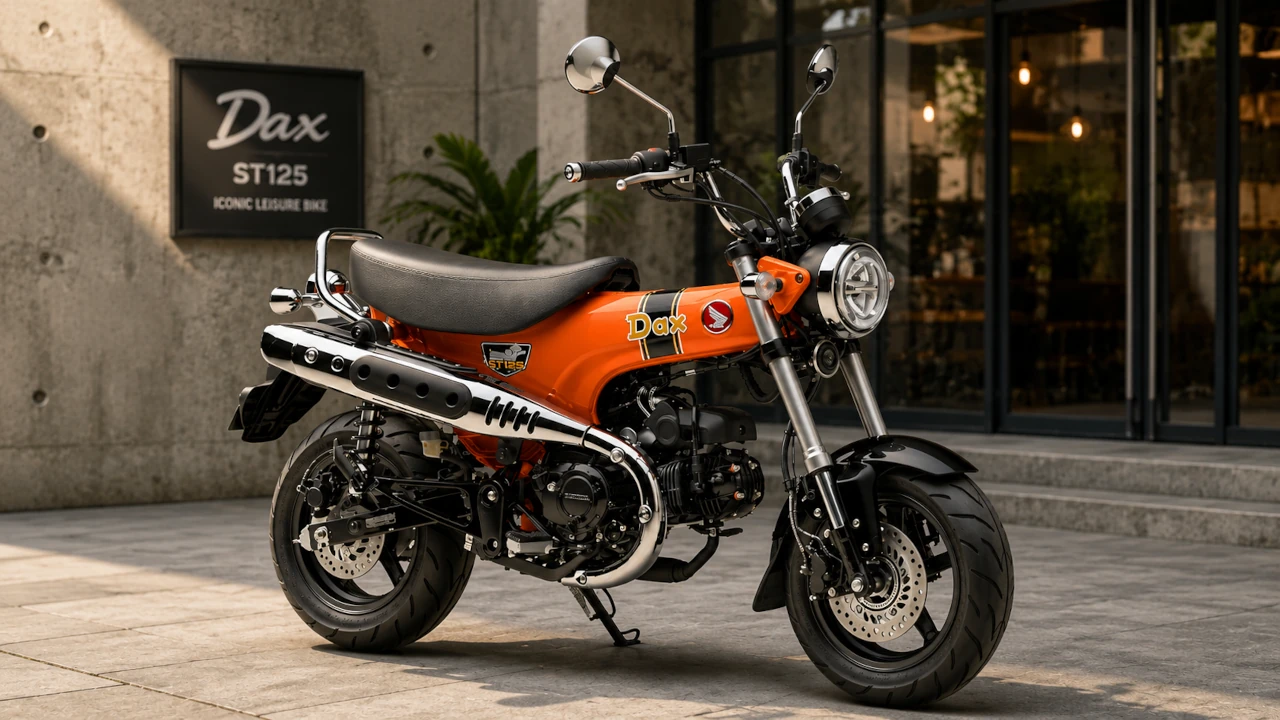
Honda has now refreshed the ST125 Dax with two new color options, Candy Energy Orange and Pearl Shining Black. Both are offered at the same Rp84.5 million on-the-road price for Jakarta.
A Motorcycle With a Long History
The modern ST125 Dax traces its identity to a motorcycle first introduced by Honda in 1969.
The original Dax became recognizable for its compact proportions and distinctive T-shaped frame. Unlike conventional motorcycles, the frame itself became one of the most noticeable elements of the design.
More than five decades later, Honda has retained that visual formula in the ST125 Dax.
The fuel tank is integrated into the T-shaped frame, while chrome details, a high-mounted handlebar and the distinctive exhaust design reinforce its retro appearance. Even the Dax name and classic Honda Wing emblem contribute to the connection with the original model.
That heritage is one reason the Dax cannot be evaluated in exactly the same way as an ordinary 125cc commuter motorcycle.
The Price Is Not About Engine Size Alone
The ST125 Dax uses a 124cc single-cylinder, air-cooled engine with Honda’s PGM-FI fuel injection system.
It produces a maximum output of 6.6 kW at 7,000 rpm and maximum torque of 10.4 Nm at 5,000 rpm. The engine is paired with a four-speed transmission and centrifugal clutch.
Those specifications are modest compared with many larger motorcycles available in Indonesia.
But engine performance is only part of the Dax proposition. Honda positions the motorcycle as an iconic leisure bike, meaning its primary appeal is the experience and character it offers rather than outright performance or maximum practicality.
That distinction helps explain why comparing its price directly with a conventional 150cc or 160cc motorcycle can be misleading.
Small Dimensions Are Part of the Appeal
The Dax weighs only 107 kilograms and has a wheelbase of 1,198 millimeters.
Its compact proportions make the motorcycle visually distinctive, while the 12-inch wheels give it a characteristic stance. The front tyre measures 120/70 and the rear 130/70.
The riding position is also designed around the Dax’s leisure-bike character. Its seat height is 778 millimeters, while the longer seat allows two people to ride together.
A rear grab rail adds support for the passenger, making the motorcycle more practical than its small appearance might suggest.
The suspension setup consists of inverted telescopic forks at the front and twin rear shocks.
Modern Technology Under a Retro Exterior
The Dax may look like a motorcycle from another era, but its equipment is considerably more modern.
LED lighting is used for the headlight, taillight and turn signals, while the instrument panel uses a digital negative-display design.
The braking system is another example of modern technology being integrated into a retro package.
The ST125 Dax uses a single-channel ABS system supported by an Inertial Measurement Unit, or IMU. The system is designed to help prevent the rear wheel from lifting during sudden braking.
The motorcycle also uses front and rear disc brakes, measuring 220 millimeters and 190 millimeters respectively.
These features help separate the modern Dax from the motorcycles that inspired its appearance.
The New Colors Change Its Personality
Honda’s latest update does not involve a major mechanical overhaul.
Instead, the company is introducing two new colors designed to give the motorcycle different personalities.
Candy Energy Orange combines orange and black for a more expressive appearance, while Pearl Shining Black creates a darker and more understated look.
Both versions retain the chrome components and retro details that define the model.
For a motorcycle aimed heavily at lifestyle buyers, this kind of visual customization can be more important than a small increase in engine performance.
So, Who Is the Dax Really For?
The Honda ST125 Dax is not necessarily the logical choice for someone looking for the most practical motorcycle for the money.
A conventional motorcycle can offer more performance, larger wheels, greater storage options or a lower purchase price.
The Dax appeals to a different type of buyer: someone who values design, heritage and individuality as much as transportation.
That is why its Rp84.5 million price tag needs to be viewed differently.
Buyers are paying not simply for a 125cc engine, but for a recognizable design that has survived from the late 1960s into the modern era, combined with contemporary equipment and the novelty of owning a motorcycle that stands apart from mainstream models.
In a motorcycle market where practicality often dominates purchasing decisions, the Dax occupies a much smaller but distinctive space.
It is tiny, retro and undeniably expensive for its engine size. But that is also precisely why it continues to attract attention.