

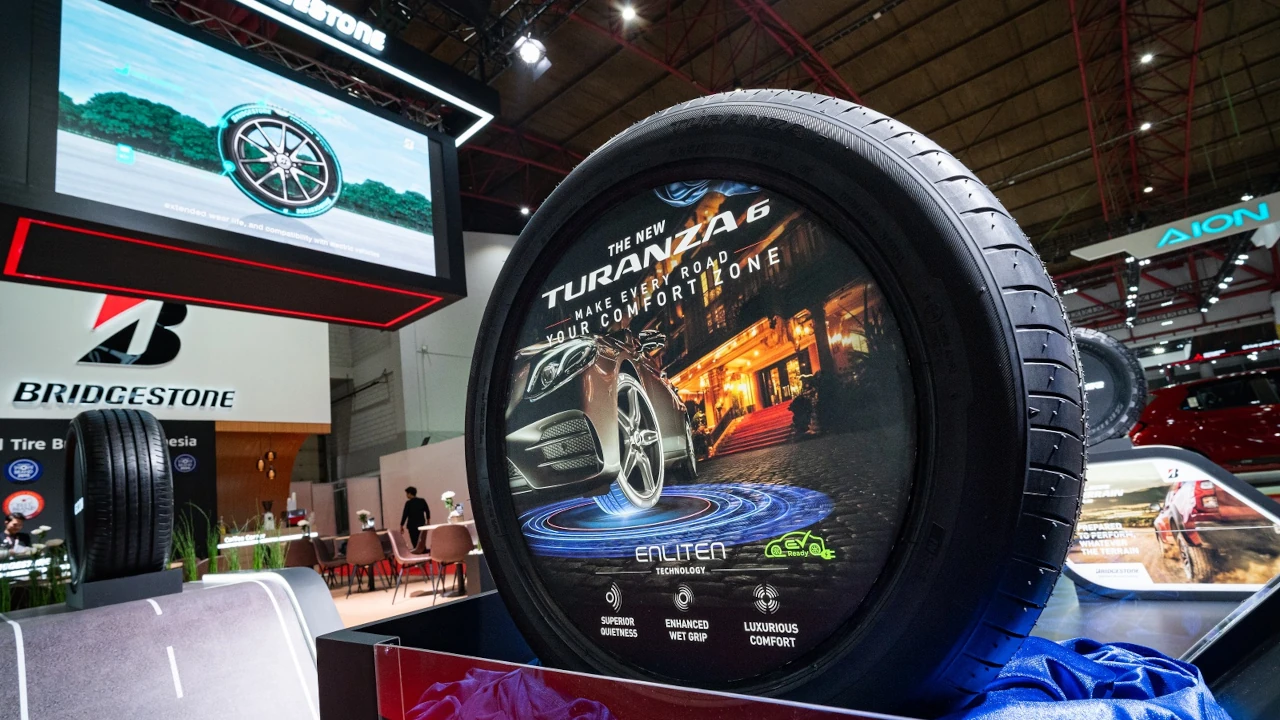
Bekasi – When Bridgestone began manufacturing tires in Indonesia five decades ago, the country was still developing its modern automotive industry. Today, Indonesia has become more than a sales market for the Japanese tire maker, serving as an important manufacturing and export base within Bridgestone’s global operations.
Bridgestone Tire Indonesia marked its 50th anniversary in August 2026, celebrating five decades of manufacturing, distribution and technological development in the country. The milestone also highlights how Indonesia’s role has evolved alongside the growth of its automotive industry.
The company’s Indonesian journey began in 1976 with the opening of its first manufacturing plant in Bekasi, West Java.
From One Factory to a Larger Manufacturing Footprint
The decision to establish production in Indonesia reflected the country’s growing importance as an automotive market.
As demand increased in Indonesia and neighboring countries, Bridgestone expanded its local manufacturing capacity. In 1999, the company opened its second plant in Karawang, West Java.
The Karawang facility also includes a proving ground built to global standards. Such a facility gives the company an environment to evaluate tire performance and develop products for different requirements.
Over the following decades, Bridgestone Indonesia expanded its capabilities beyond simply producing tires.
The company developed local expertise across manufacturing, distribution and product development, while serving several segments including passenger cars, commercial vehicles and specialty tires.
That gradual expansion helped turn Indonesia into an important part of Bridgestone’s wider regional operations.
Indonesia Is More Than a Domestic Market
Bridgestone Corporation currently operates across more than 150 countries and territories, but local manufacturing remains an important component of its global strategy.
Indonesia is particularly relevant because it combines a large domestic automotive market with an established manufacturing ecosystem and access to other markets in the region.
Nobuyuki Tamura, Member of the Board, Representative Executive Officer and EAST CEO of Bridgestone Corporation, described Indonesia as both an important market and a strategic manufacturing and export base within the company’s global network.
That position has developed over decades rather than appearing overnight.
The presence of multiple manufacturing facilities, local technical capabilities and established supply chains gives Bridgestone a foundation for responding to both Indonesian demand and opportunities beyond the domestic market.
The Next Challenge Is Electrification
The tire industry is now facing a new challenge as electric vehicles become increasingly common.
EVs create different requirements for tires because electric vehicles typically have different weight distribution, instant torque characteristics and noise characteristics compared with conventional internal-combustion vehicles.
That means tire manufacturers need to consider more than grip and durability. Rolling resistance, acoustic comfort and the ability to handle the characteristics of electric powertrains are also becoming increasingly important.
Bridgestone Indonesia is already moving in this direction.
In 2026, the company began supplying tires equipped with its B-Silent technology to a global automaker operating in Indonesia.
The technology is designed to reduce noise inside the cabin, addressing an issue that can become more noticeable in EVs because the absence of engine noise makes other sources of sound more apparent.
This development also illustrates how local operations are becoming involved in newer technologies rather than simply manufacturing established tire designs.
Local Engineering Becomes More Important
The ability to manufacture products locally is only part of the equation.
Bridgestone Indonesia says its capabilities now include product research, material planning, specialized design and manufacturing for the Indonesian market.
That combination allows the company to connect global technical expertise with knowledge of local road conditions, customer requirements and vehicle trends.
It also creates an opportunity to develop products that are better suited to the characteristics of the regional market.
Mukiat Sutikno, President Director of Bridgestone Indonesia, said the company intends to strengthen its local capabilities while responding to changing market requirements.
The direction is particularly relevant as the automotive industry becomes more technology-driven.
Five Decades of Change in the Auto Industry
Bridgestone’s 50-year history in Indonesia mirrors many of the changes experienced by the country’s automotive industry.
The company entered when Indonesia was building its automotive manufacturing base. It subsequently expanded production capacity as vehicle ownership increased and Indonesia became more integrated into regional manufacturing networks.
Now, the industry is moving toward electrification, connected technologies and more sustainable mobility.
For tire manufacturers, that transition means developing products that work with new vehicle architectures while meeting expectations for efficiency, safety and comfort.
The challenge is not simply to produce more tires, but to develop the technology required by vehicles that are fundamentally different from many of the cars that dominated the market during the industry’s earlier decades.
What Comes After the 50-Year Milestone?
Bridgestone’s anniversary is therefore more than a celebration of its past.
The company’s development from a single manufacturing facility in Bekasi to a larger Indonesian manufacturing and technology operation shows how its relationship with the country has evolved.
Indonesia is now positioned as a market, production center and export base, while local technical capabilities give the company a foundation for developing newer mobility solutions.
The next chapter will be shaped by different challenges from those Bridgestone faced in 1976.
As EV adoption grows and automakers demand increasingly specialized components, Indonesia’s value to global tire manufacturers may depend not only on how many tires can be produced, but also on how much technology and expertise can be developed locally.
After 50 years, Bridgestone’s Indonesian story has therefore moved well beyond its first factory in Bekasi. The bigger question is how far that manufacturing and technological foundation can take the company over the next five decades.