

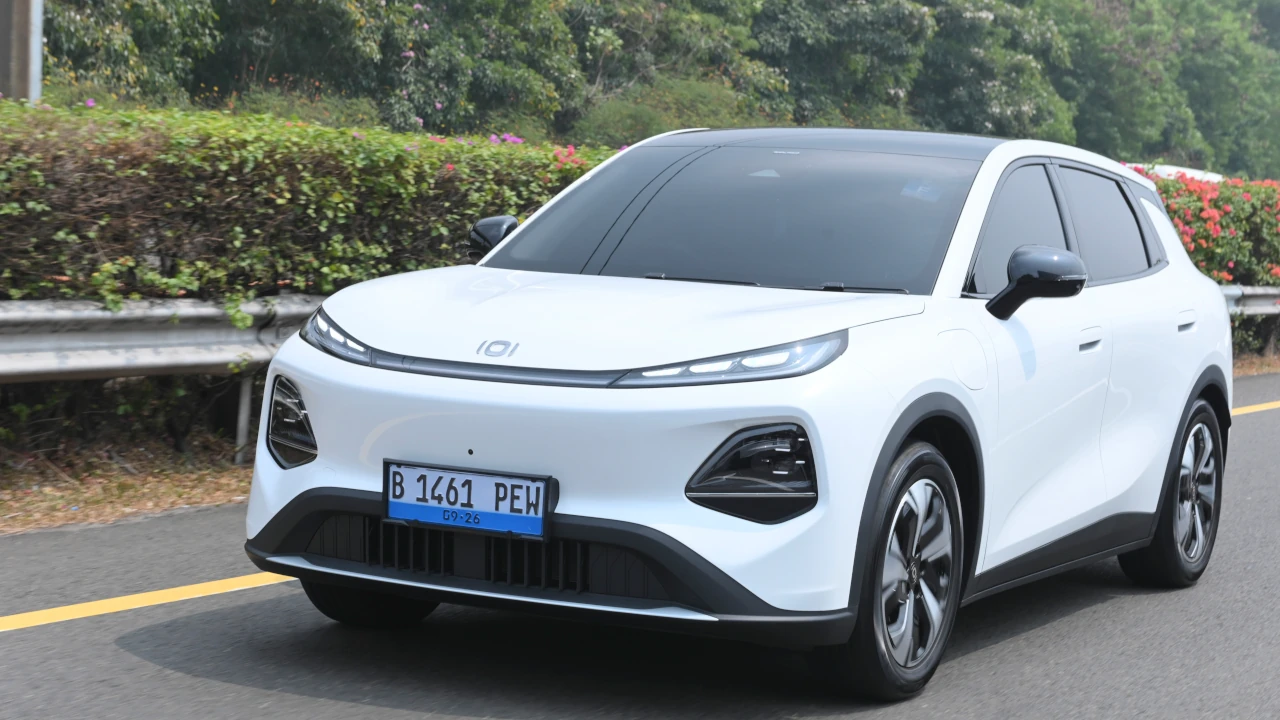
Jakarta – Indonesia’s electric vehicle market is becoming increasingly crowded, with global automakers introducing different brands and technologies to compete for buyers. For Changan, the response is not to rely on a single name, but to build a broader electric vehicle portfolio through multiple brands.
The Chinese automaker, together with Indomobil Group, has introduced Nevo as a new sub-brand focused on new-energy vehicles and smart technology. Nevo joins Deepal in Changan’s Indonesian portfolio, but the two brands are being positioned with different characteristics.
The strategy reflects a broader challenge facing automakers entering the rapidly developing EV market: different consumers may want electric vehicles, but they do not necessarily want the same kind of electric vehicle.
One Group, Different EV Customers
Changan is using Nevo and Deepal to create different identities within its electrified vehicle business.
Nevo focuses on new-energy vehicles, smart technology and everyday usability. Its name itself comes from “New Evolution, New Vision and New Origin,” reflecting the brand’s emphasis on technology and a new approach to mobility.
Deepal, meanwhile, has already established its own identity within Changan’s Indonesian portfolio.
Having separate brands allows an automotive group to communicate different product philosophies without forcing every model into the same identity. This can be particularly useful in a market where buyers range from first-time EV owners to customers looking for more premium technology and performance.
Nevo Starts With a Compact SUV
Nevo’s first model in Indonesia is the Nevo Q05, a compact electric SUV introduced at GIIAS 2026.
The model is aimed at younger consumers and modern families, with the “Smart Drive, Easy Life” concept emphasizing practicality, technology and convenience.
Its positioning is important because compact SUVs represent a broad consumer segment. Instead of introducing an expensive flagship model first, Changan is using a relatively compact SUV as the entry point for the new brand.
The Q05 measures 4,435 millimeters long, 1,855 mm wide and 1,600 mm tall, with a 2,735 mm wheelbase. Changan claims a space utilization figure of 86.6 percent, while the rear luggage compartment provides 540 liters of capacity and can expand to 1,380 liters with the rear seats folded.
These characteristics show that Nevo’s initial proposition is not based entirely on technology. Practicality is equally important.
Smart Features Are Becoming a Differentiator
Technology is becoming one of the most competitive areas of the EV market.
The Nevo Q05 comes with a 540-degree surround-view system with transparent chassis visualization, a 360-degree driving video recorder and a smart lighting system.
It also offers 18 ADAS functions and seven intelligent driving assistance features, supporting Level 2 driver assistance capabilities.
Those features are increasingly becoming part of the competition between EV manufacturers. As electric powertrains become more common, manufacturers have fewer opportunities to differentiate purely through the basic concept of driving without gasoline.
Software, driver assistance, connectivity and user interfaces are therefore becoming increasingly important.
Charging Is Another Part of the Strategy
The Q05 also illustrates how Changan is approaching one of the biggest concerns for EV buyers: charging.
The SUV uses a 51.9 kWh lithium iron phosphate battery and supports up to 162 kW of 3C fast charging through its Golden Shield Battery 2.0 technology.
Changan claims the battery can charge from 30 percent to 80 percent in approximately 15 minutes. A five-minute charging session is claimed to add around 100 kilometers of range.
The vehicle’s claimed range reaches 462 kilometers under the NEDC test cycle.
It also supports Vehicle-to-Load technology with an output of up to 3.3 kW, allowing the vehicle to supply electricity to external equipment.
These features give Nevo several talking points beyond simply being another compact electric SUV.
Why Not Put Everything Under Deepal?
The decision to introduce another brand raises an obvious question: why not sell additional EVs under Deepal?
The answer lies in positioning.
Automotive groups commonly create separate brands when they want to address different customer expectations, price levels or product philosophies. A distinct identity can also allow each brand to develop its own design language and communication strategy.
For Changan, Nevo gives the group another platform for reaching customers who may prioritize smart technology, practicality and accessible electrification.
Deepal can continue developing its own position without every product having to serve the same customer profile.
That becomes more relevant as Changan expands its electrified lineup.
Early Results Give Nevo a Starting Point
Nevo’s Indonesian debut also produced an early indication of consumer interest.
At GIIAS 2026, Changan recorded 1,120 vehicle orders, with the Nevo Q05 accounting for 876 of them, or around 78 percent of the total.
That does not guarantee long-term success, since orders recorded at an auto show can differ from actual deliveries and sustained retail demand.
Nevertheless, the result gives Changan an initial signal that there is interest in the Q05 and the new Nevo brand.
The model also arrives with an established record in China, where it reportedly accumulated 100,000 units in sales within eight months of its launch.
The Bigger Test Is Still Ahead
Launching multiple brands can give an automotive group more flexibility, but it also creates additional challenges.
Each brand needs a clear identity, adequate dealer and service support, competitive products and a customer base large enough to justify its presence.
For consumers, having more choices can be beneficial, but it can also make the market more complicated. Buyers need to understand not only which model fits their needs, but also what each brand represents.
Changan’s decision to operate Nevo alongside Deepal suggests that the company sees Indonesia’s EV market as large enough to support different approaches to electrification.
Nevo’s first task will be to establish its own identity rather than simply being seen as another Changan badge.
If it succeeds, Changan could gain access to a wider range of Indonesian EV buyers without forcing every product into the same brand strategy.
The real test, however, will come after the excitement of a new launch fades. Sustained sales, product expansion and after-sales support will ultimately determine whether Changan’s multi-brand EV strategy can become a lasting presence in Indonesia.