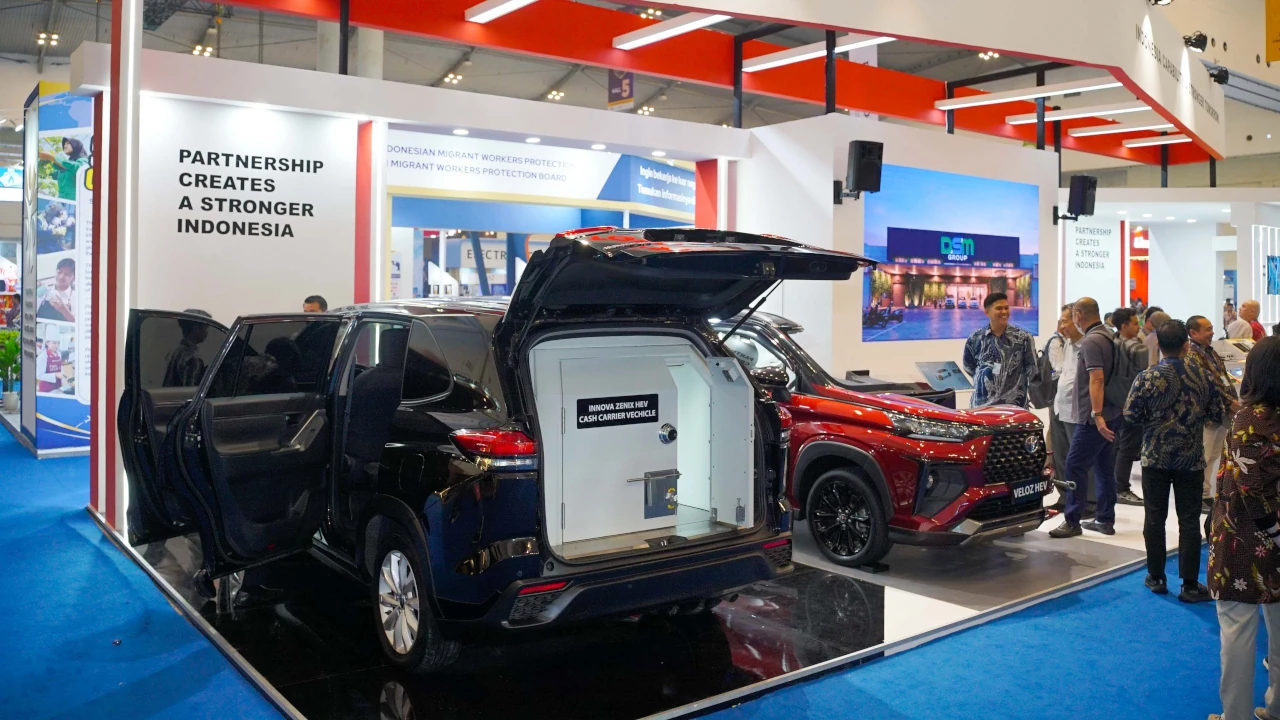
Jakarta – Toyota hybrid exports from Indonesia continued to grow in 2026, highlighting the country’s expanding role in the global electrified vehicle market. Through September, exports of the Toyota Kijang Innova Zenix Hybrid Electric Vehicle (HEV) and Yaris Cross HEV reached 25,752 units, an increase of 63.6% from 15,740 units in the same period last year.
The growth came as Indonesia’s overall completely built-up (CBU) vehicle exports declined. According to figures from the Association of Indonesian Automotive Manufacturers (GAIKINDO), national CBU exports reached 371,260 units between January and September 2026, down 2.7% from 381,644 units a year earlier.
Toyota-branded vehicles moved in the opposite direction. Exports increased 2.5% year-on-year to 223,696 units, accounting for approximately 60.3% of Indonesia’s total CBU exports.
The figures underline Toyota’s position in Indonesia’s export industry and the growing contribution of locally manufactured hybrid vehicles.
Innova Zenix HEV and Yaris Cross HEV Drive Export Growth
The Kijang Innova Zenix HEV and Yaris Cross HEV were the two Toyota hybrid models contributing to the reported export growth.
Their combined shipments reached 25,752 units during the first nine months of 2026. The 63.6% increase indicates stronger overseas demand for hybrid vehicles produced in Indonesia.
Hybrid electric vehicles combine an internal combustion engine with an electric motor and battery system. Unlike battery electric vehicles, conventional HEVs do not require external charging. Their ability to use both power sources can offer improved fuel efficiency compared with comparable conventional vehicles, depending on driving conditions.
For export markets, hybrid models provide an electrified option for buyers who may not yet have access to widespread charging infrastructure. Their continued growth also creates opportunities for Indonesian manufacturers to develop production capabilities for electrified vehicles.
Toyota’s export performance suggests that locally produced hybrid models are becoming a more important part of its international product portfolio.
Toyota Maintains Its Position in Indonesia’s Export Market
Toyota’s overall export performance also remained positive through September 2026.
GAIKINDO data cited by Toyota recorded 223,696 exported Toyota vehicles, compared with 218,162 units during the same period in 2025. This represented annual growth of 2.5%, despite the contraction in total Indonesian CBU exports.
Demand from the Americas increased 14.3%, while exports to Asia rose 3.5%. These gains helped offset a decline of approximately 16% in the Middle East market.
Toyota’s export lineup includes several models manufactured in Indonesia for international buyers. The Avanza and Veloz led the company’s CBU exports during January–September 2026, with 48,425 units. The Raize followed with 39,001 units, while the Yaris Cross recorded 32,447 units.
The mix demonstrates the role of locally produced vehicles across different market segments. It also shows that Indonesia’s automotive manufacturing industry serves international demand rather than relying exclusively on domestic sales.
Indonesia Expands Its Role in the Global Hybrid Supply Chain
Toyota Motor Manufacturing Indonesia (TMMIN) is working to expand the country’s contribution to the automaker’s global manufacturing network.
Beyond exporting complete vehicles, TMMIN exports knocked-down vehicle sets, automotive components, engines, engine parts, dies, and jigs. These products support manufacturing and production requirements in overseas markets.
The company has also announced plans to begin exporting HEV battery pack assemblies in the second half of 2026. This would broaden Indonesia’s contribution to electrified vehicle production beyond the export of finished hybrid cars.
Developing these capabilities can help strengthen domestic manufacturing expertise and increase the value of automotive products produced in Indonesia. It also creates opportunities for local suppliers to participate in more advanced parts of the vehicle supply chain.
According to TMMIN, its manufacturing activities involve approximately 360,000 workers and are supported by 760 suppliers across Tier 1 to Tier 3. This network forms part of the wider industrial ecosystem behind the country’s automotive production and exports.
Toyota’s Export History Spans Nearly Four Decades
Toyota began exporting vehicles produced in Indonesia in 1987. By September 2026, its cumulative exports had reached 3,375,490 completely built-up vehicles shipped to more than 100 countries.
The company’s export development has been supported by trade agreements between Indonesia and partner markets. These include the Indonesia-Japan Economic Partnership Agreement, the ASEAN Trade in Goods Agreement, and the Indonesia–United Arab Emirates Comprehensive Economic Partnership Agreement.
Such agreements can provide preferential trade arrangements when exporters meet the applicable requirements. They help manufacturers access international markets and strengthen the competitiveness of products made in Indonesia.
TMMIN received the Primaniyarta Award 2026 in the Exporter Utilizing Free Trade Agreements category. The award was presented by Trade Minister Budi Santoso on October 14, 2026, during the 41st Trade Expo Indonesia in Tangerang, Banten.
The recognition highlights the role of trade policy and industrial partnerships in supporting exports.
Hybrid Exports Offer a New Growth Opportunity
The rise in Toyota hybrid exports reflects a broader shift in Indonesia’s automotive manufacturing landscape. The country continues to ship conventional vehicles in large numbers while increasing its contribution to electrified vehicle production.
The combined exports of the Kijang Innova Zenix HEV and Yaris Cross HEV rose 63.6% through September 2026. Meanwhile, Toyota’s total CBU exports grew even as Indonesia’s overall shipments declined.
Plans to export HEV battery pack assemblies could further strengthen this position by expanding the range of electrified products made locally.
The next challenge will be to sustain overseas demand, develop manufacturing capabilities, and maintain competitiveness as automakers around the world expand their electrification strategies.
For Indonesia, continued growth in hybrid vehicle exports could help deepen the country’s role in the global automotive supply chain while supporting local manufacturing, suppliers, and workers.