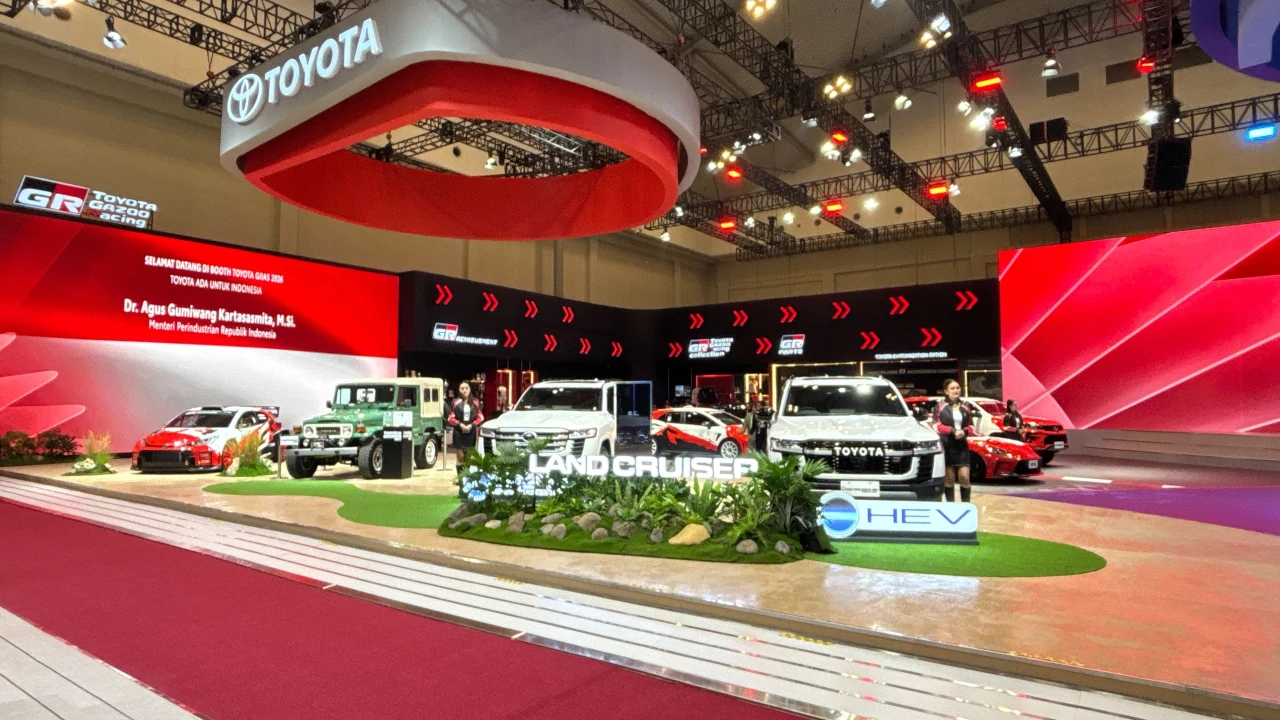
Jakarta – Indonesia’s automotive market remains dominated by established Japanese brands, but competition is becoming more diverse. Toyota retained its leading position in retail sales through September 2026, while BYD secured a place among the country’s five best-selling automotive brands.
Based on the January–September 2026 retail sales figures provided by Gaikindo, Toyota recorded 194,519 units, giving it a 28.8% market share. Daihatsu followed with 109,376 units and a 16.2% share. Together, the two brands accounted for approximately 45% of the reported market.
However, the rankings also highlight the growing presence of brands competing beyond the traditional market leaders. BYD recorded 42,710 units during the same period, placing fifth with a 6.3% share. Its position puts the electric vehicle-focused brand ahead of Honda in the reported retail sales ranking.
Although BYD remains far behind Toyota in total volume, its presence among the top five illustrates how competition in Indonesia is evolving.
Toyota Maintains a Strong Lead
Toyota continued to lead Indonesia’s automotive retail market by a considerable margin. Its 194,519-unit total was nearly twice Daihatsu’s reported sales and more than four times BYD’s volume.
Toyota’s position reflects its established presence across several vehicle segments. The brand competes in passenger cars, multipurpose vehicles, sport utility vehicles, and electrified models, giving customers a broad range of options.
Daihatsu remained the second-largest brand, recording 109,376 units. Suzuki took third place with 54,179 units, followed by Mitsubishi Motors at 50,407 units.
The figures show that established brands continue to hold significant positions in Indonesia. However, maintaining that position increasingly requires manufacturers to respond to changing customer preferences, new technologies, and competition from a wider range of brands.
BYD Enters the Top Five
BYD’s fifth-place position is one of the notable developments in the January–September 2026 retail sales data.
The brand recorded 42,710 units, ahead of Honda’s 35,885 units. BYD also reported monthly sales of 7,421 units in September, compared with 2,516 units in January.
This monthly comparison points to a stronger sales performance at the end of the period than at the beginning. However, the figures alone do not establish the reasons behind that change or confirm whether the trend will continue.
BYD’s position also reflects the expanding competition in Indonesia’s electrified vehicle segment. Its presence gives consumers another major option as the market develops beyond its traditional lineup of established Japanese manufacturers.
Still, BYD’s challenge should be viewed in context. Toyota retains a substantial lead, and the gap between the two brands remains significant. BYD’s immediate competitive milestone is strengthening its position among the leading brands rather than matching Toyota’s total volume.
Competition Extends Beyond the Market Leaders
The rankings reveal a competitive field beyond Toyota, Daihatsu, and the other long-established manufacturers.
Mitsubishi Motors recorded 50,407 units, placing fourth, while Honda followed BYD with 35,885 units. Mitsubishi Fuso recorded 31,409 units, highlighting the importance of commercial vehicles within the wider automotive market.
Jaecoo also registered a notable total of 26,886 units. Geely recorded 14,306 units, while Wuling reached 13,614 units. These figures show that several brands outside the traditional leaders have established measurable positions in the market.
Their individual results differ considerably, and the data does not establish that every brand is growing. Nevertheless, the rankings demonstrate that Indonesian consumers can choose from an increasingly diverse group of manufacturers.
This competition places greater emphasis on product appeal, pricing, technology, distribution, and after-sales support. Manufacturers must offer a clear reason for customers to choose their vehicles in an increasingly crowded market.
What the Rankings Mean for Indonesia’s Automotive Market
The January–September 2026 figures suggest that Indonesia’s automotive market is balancing two developments. Established brands continue to command large sales volumes, while newer competitors are gaining visibility in the rankings.
Toyota’s lead demonstrates the strength of its existing market position. BYD’s fifth-place finish, meanwhile, highlights the growing significance of competition from brands associated with electric mobility.
The rankings do not, by themselves, show how much of BYD’s performance comes from electric vehicle demand, promotional activity, product availability, or other factors. Further model-level and market data would be needed to establish those connections.
The figures also represent retail sales rather than factory shipments or wholesale deliveries. That distinction matters when comparing results across different industry reports.
For now, Toyota remains the clear leader in Indonesia’s automotive retail market. BYD has secured a place among the top five, while brands such as Suzuki, Mitsubishi Motors, Honda, Jaecoo, Geely, and Wuling continue to compete for customers.
The next challenge will be sustaining those positions as manufacturers introduce new models and respond to changing market conditions. Indonesia’s automotive rankings may continue to evolve, but the latest figures show that the competition is no longer limited to the traditional market leaders.