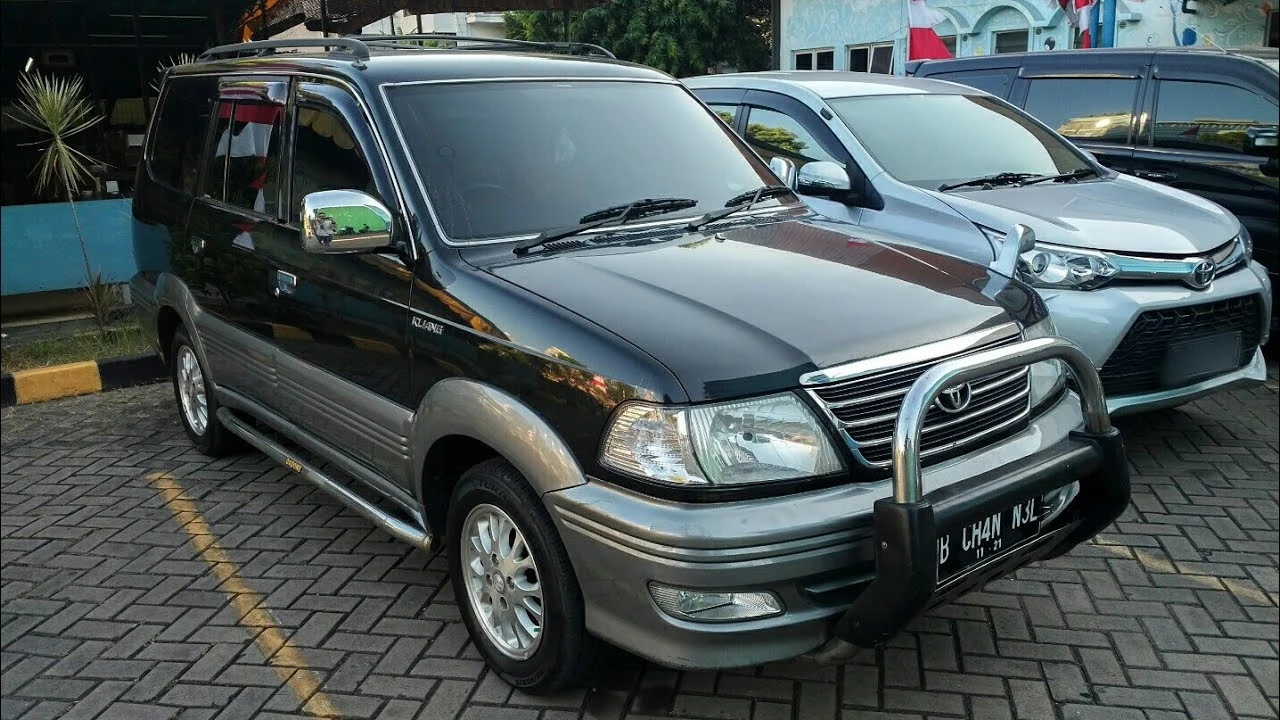
Jakarta – October 1, 2003, marked a significant milestone in Indonesia’s automotive history. On that date, Toyota celebrated the production of its one-millionth Kijang, a special achievement represented by the Toyota Kijang Krista. The milestone reflected the model’s lasting appeal and its important role in the development of Indonesia’s automotive industry.
The achievement came 26 years after the Kijang first entered the Indonesian market. During that period, the model had evolved from a basic commercial vehicle into a familiar name among Indonesian families.
How the Toyota Kijang Began Its Journey
Toyota introduced the Kijang in Indonesia in 1977. According to Toyota’s official historical records, the vehicle was developed as a Basic Utility Vehicle, or BUV, to support the country’s industrialization ambitions and growing transportation needs.
The original Kijang featured a simple pickup design. Its practical construction made it suitable for businesses, commercial operators, and customers who needed a versatile vehicle.
Local production was central to the project. Toyota aimed to create employment opportunities, develop domestic manufacturing capabilities, and increase the use of locally produced components.
The first-generation model became known as the Kijang Buaya because of its distinctive hood design. Although its appearance differed considerably from modern passenger cars, it established the foundation for a model that would continue to evolve with Indonesian consumers.
From a Utility Vehicle to a Family Favorite
The Kijang’s transformation accelerated with subsequent generations. The second generation arrived in 1981, followed by the third generation in 1986.
The third-generation Kijang, commonly known as the Kijang Super, brought a more modern design. It also became the first Kijang generation exported by Toyota Indonesia, extending the model’s reach beyond the domestic market.
In 1997, Toyota introduced the fourth generation, widely known as the Kijang Kapsul. Its rounded body and more aerodynamic styling reflected changing customer preferences.
The fourth generation also included the Kijang Krista, the model associated with the million-unit milestone in October 2003. The Krista represented a more developed version of a nameplate that had grown alongside Indonesia’s changing transportation needs.
By this point, the Kijang had become more than a practical commercial vehicle. Its passenger-oriented variants had helped establish its place in the family-car market.
What the Million-Unit Milestone Meant
Reaching one million units demonstrated the scale of the Kijang’s presence in Indonesia. It also highlighted the long-term development of a locally produced vehicle designed around the needs of the domestic market.
The milestone was particularly significant because the Kijang’s evolution mirrored changes in Indonesia’s automotive industry. Local manufacturing capabilities expanded, product designs became more sophisticated, and customer expectations shifted toward greater comfort and convenience.
Toyota’s history of the Kijang also records the model’s growing contribution to the company’s export activities. This progression showed how a vehicle originally developed for practical transportation could support broader industrial ambitions.
The achievement did not happen overnight. It followed decades of product development, manufacturing investment, and adaptation to changing market demands.
The Kijang Legacy Continues
The next major transformation came in 2004 with the introduction of the Kijang Innova. The new generation adopted a more modern design and placed greater emphasis on family comfort.
Toyota continued to develop the nameplate through subsequent generations. In 2015, the All-New Kijang Innova brought further improvements in design and performance.
In 2022, Toyota introduced the Kijang Innova Zenix, which added a hybrid electric vehicle option to the lineup. The model represented another major step in the Kijang’s evolution, reflecting the growing importance of electrification in the automotive industry.
Despite these changes, the Kijang name remains connected to its original purpose: providing practical transportation for Indonesian customers.
The October 1, 2003, milestone offers a useful moment to reflect on that journey. From a simple utility vehicle in 1977 to a million-unit production achievement and the modern Innova Zenix, the Kijang has continually adapted to the needs of its market.
Its history is not only the story of a successful vehicle. It is also a record of how Indonesia’s automotive industry has developed over several decades.