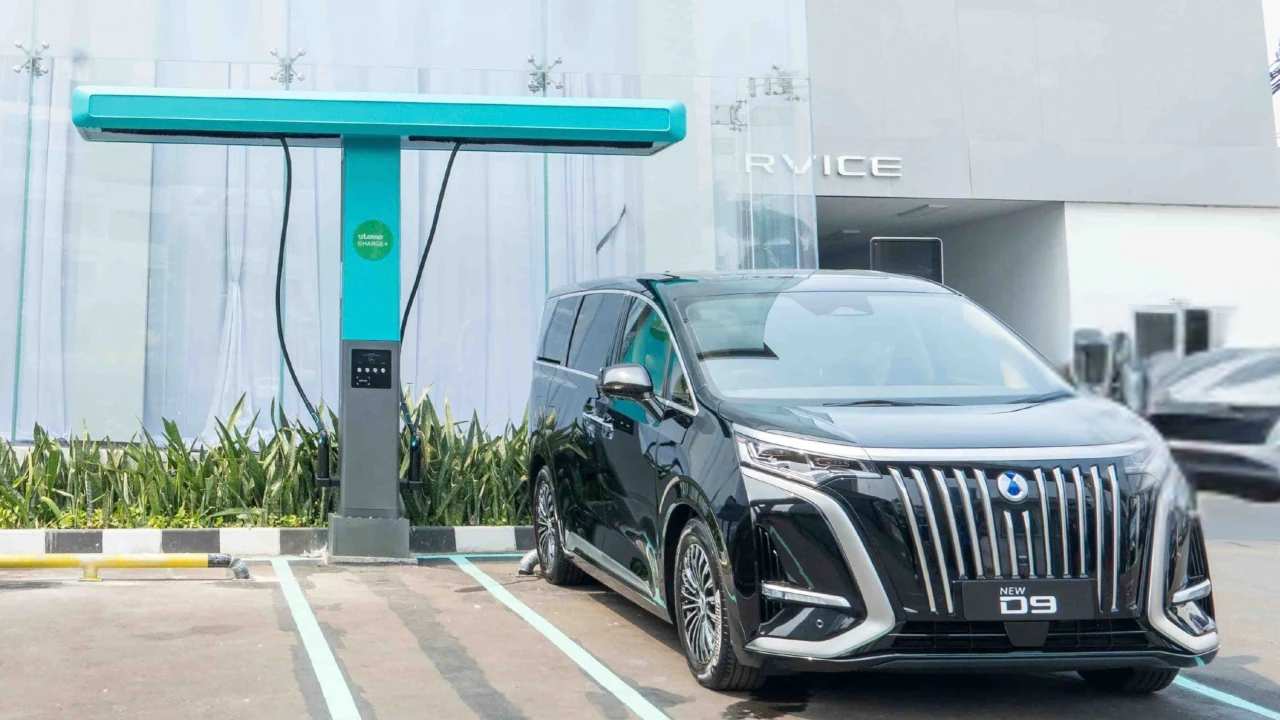
Jakarta – BYD has introduced FLASH Charging technology and its second-generation Blade Battery in Indonesia, bringing its latest battery and charging developments to the country’s growing electric vehicle market. The system aims to reduce charging time, one of the practical concerns for drivers considering an electric vehicle.
BYD says compatible vehicles can charge from 10% to 70% in around five minutes. The company also claims that charging from 10% to 97% can take approximately nine minutes under suitable conditions. These figures form the basis of its “Ready in 5, Full in 9” message. However, actual charging times depend on the vehicle, battery conditions, temperature, and charging equipment.
According to BYD’s announcement on October 14, 2026, the company plans to begin Indonesia’s rollout with 10 FLASH Charging units at DANZA dealerships. The initiative marks an initial step toward making the technology available to local electric vehicle users.
How BYD FLASH Charging Works
The FLASH Charging system can deliver up to 1,500 kW through a single connector, according to BYD. This output is designed to support charging at exceptionally high power levels when paired with compatible vehicles and batteries.
However, a charger’s maximum output alone does not determine charging speed. The vehicle’s battery must also accept high power efficiently and manage the heat generated during charging. BYD has developed FLASH Charging to work with its second-generation Blade Battery as an integrated system.
The charging equipment also uses an energy storage system to help manage its high power demands. This setup can store energy and deliver it during charging sessions. As a result, the system aims to reduce pressure on the local electricity supply while supporting high-power charging.
BYD has also introduced a T-shaped overhead cable arrangement. A suspended rail and pulley system helps users position the connector without dragging the cable across the ground. The design aims to make the charging process easier to handle and keep the charging area more organized.
Another feature is automatic authentication through Plug and Charge on compatible vehicles with the service enabled. Drivers can connect the charger without manually starting every session through an app or charging card.
Second-Generation Blade Battery Supports Faster Charging
The second-generation Blade Battery forms the other half of BYD’s new charging system. The company developed the battery through six years of research, focusing on charging speed, energy density, and safety.
BYD reports a 5% increase in energy density compared with the previous generation. Higher energy density can help a battery store more energy within a given size or weight. This can support vehicle range without requiring a proportionate increase in battery size.
The company also developed its FlashPass Ion Transport System to improve how lithium ions move through the battery. The system combines changes to the cathode, electrolyte, and anode. According to BYD, these developments help reduce internal resistance and manage heat during high-power charging.
Battery safety remains important when charging at high power. BYD says the second-generation Blade Battery passed a simultaneous FLASH Charging and nail-penetration test without thermal runaway, smoke, or fire. The company also reported that the battery passed a forced short-circuit test involving four cells.
These results represent the manufacturer’s reported test outcomes. Independent testing and real-world use will provide additional information about long-term performance and durability.
What the Technology Means for EV Drivers
Shorter charging times could make electric vehicles more practical for drivers who cannot charge at home or need to continue a journey quickly. Drivers could also spend less time waiting at charging stations during longer trips, provided compatible chargers are available along their routes.
Nevertheless, FLASH Charging will not deliver the same results with every electric vehicle. The car must support the required charging technology, and the battery must be compatible with the system. Drivers should also consider charging availability, location, and any service requirements before planning a trip around ultra-fast charging.
Infrastructure will therefore play a major role in determining the technology’s usefulness. Even a charger with very high output offers limited benefit if drivers cannot easily access it or if too few locations support compatible vehicles.
BYD Plans an Initial Charging Network in Indonesia
BYD plans to introduce 10 FLASH Charging units through DANZA dealerships in Indonesia during 2026. The company has also indicated that it will assess further expansion, including potential locations at public facilities and possible cooperation with charging infrastructure operators.
BYD is exploring collaboration with PLN as part of its efforts to support charging infrastructure development. However, the scale and timing of any wider expansion will depend on the company’s rollout plans and the progress of those partnerships.
The company has also directed consumers to the Instagram account @bydflashcharging for updates about station locations, network development, and related activities.
A New Step in Electric Vehicle Charging
BYD FLASH Charging combines high-power charging equipment with a battery designed to accept energy at a faster rate. The approach addresses charging speed as well as practical details, such as cable handling and power management.
The technology’s impact in Indonesia will depend on network availability, vehicle compatibility, and performance under local operating conditions. For now, the planned rollout at DANZA dealerships provides an initial step toward bringing ultra-fast charging to more electric vehicle users.
As the network develops, real-world charging performance and the accessibility of compatible stations will help determine how much the technology changes everyday EV ownership.