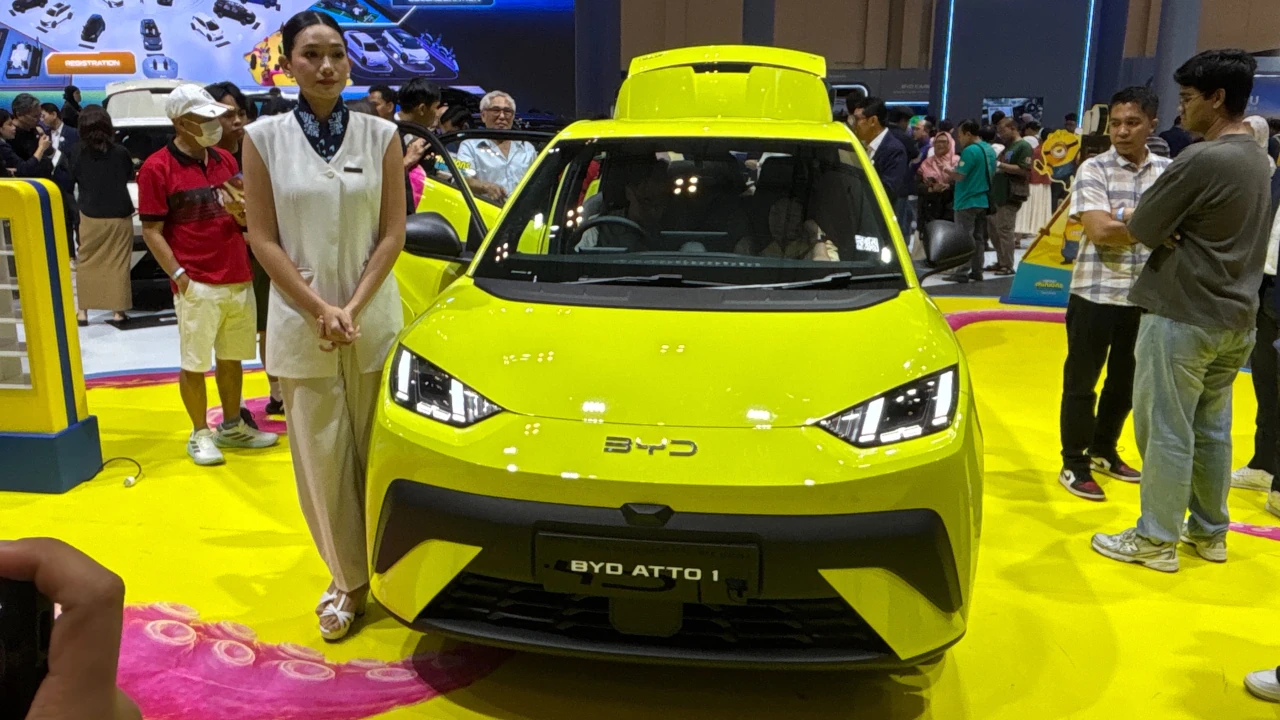
Jakarta – BYD has overtaken Honda in Indonesia’s retail sales rankings for the first eight months of 2026. The Chinese automaker recorded stronger growth, while Honda experienced a significant decline.
Based on the retail sales data provided for January–August 2026, BYD sold 35,289 vehicles in Indonesia. That figure represents an 83.1% increase from 19,278 units during the same period in 2025.
Honda, meanwhile, recorded 31,671 units. Its sales fell 36% from 49,513 units a year earlier.
The figures place BYD ahead of Honda in cumulative retail sales. They also highlight a changing competitive landscape as Chinese automakers expand their presence in Indonesia.
Retail sales measure vehicle deliveries from dealers to customers. This differs from wholesale sales, which track deliveries from manufacturers to dealers.
Toyota Remains Indonesia’s Best-Selling Brand
Despite the stronger growth from several Chinese automakers, Toyota continues to lead Indonesia’s automotive market.
Toyota recorded 172,871 retail sales during January–August 2026. That represents a 3% increase from 167,811 units in the corresponding period last year.
Daihatsu retained second place with 97,059 units, up 9.1% from 88,944 units.
Suzuki followed with 48,554 units. The Japanese brand achieved one of the stronger performances among established passenger vehicle manufacturers, increasing sales by 24.6%.
Mitsubishi Motors recorded 45,892 units, up 5.7%. Honda, by comparison, saw its cumulative sales decline despite remaining among Indonesia’s major automotive brands.
These figures show that established Japanese manufacturers continue to hold substantial positions in the market. However, their performances vary, while newer competitors are gaining ground.
BYD Gains Market Share as Sales Increase
BYD’s growth has also strengthened its share of Indonesia’s retail market.
The company’s market share reached 5.9% in the supplied January–August 2026 data, compared with 3.7% during the same period in 2025.
Its 35,289-unit total puts it ahead of Honda’s 31,671 units. This shift marks a notable development in a market where Japanese brands have traditionally held leading positions.
BYD’s expansion also reflects the growing presence of Chinese automotive manufacturers across different price points and vehicle segments. Electric vehicles have become an increasingly visible part of this competition.
However, retail sales figures alone do not explain the reasons behind a brand’s performance. Product availability, pricing, dealer coverage, new model launches and customer demand can all influence results.
The data therefore demonstrates BYD’s sales growth, but further information would be needed to determine how much each factor contributed.
Jaecoo and Geely Record Strong Growth
BYD is not the only Chinese brand posting significant gains in Indonesia.
Jaecoo recorded 23,486 retail sales in the supplied data, compared with 290 units in the same period last year. Its reported year-on-year increase reached 7,998.6%, although the percentage reflects a very small starting base.
Geely also expanded rapidly. Its retail sales rose from 1,224 units to 12,283 units, representing growth of 903.5%.
Other brands also posted increases. Chery, however, recorded a decline, with sales falling 36.9% to 8,209 units. Wuling reported 11,540 units, down 7.8%.
These contrasting results show that Chinese automakers do not share a uniform growth pattern. Some have expanded quickly, while others face a more challenging sales environment.
Indonesia’s Automotive Market Records Growth
Total retail sales reached 594,984 units in the supplied January–August 2026 data. That figure represents a 13.9% increase from 522,160 units in the same period last year.
The growth indicates stronger overall retail activity, even as individual brands experienced different results.
Toyota retained its leading position, while Daihatsu and Suzuki also recorded increases. At the same time, BYD, Jaecoo and Geely made notable gains.
The changing rankings point to a more competitive market. Established manufacturers still command substantial sales volumes, but newer entrants are building a larger presence.
For BYD, overtaking Honda represents a significant milestone in its Indonesian sales performance. The next challenge will be sustaining that momentum as competition intensifies.