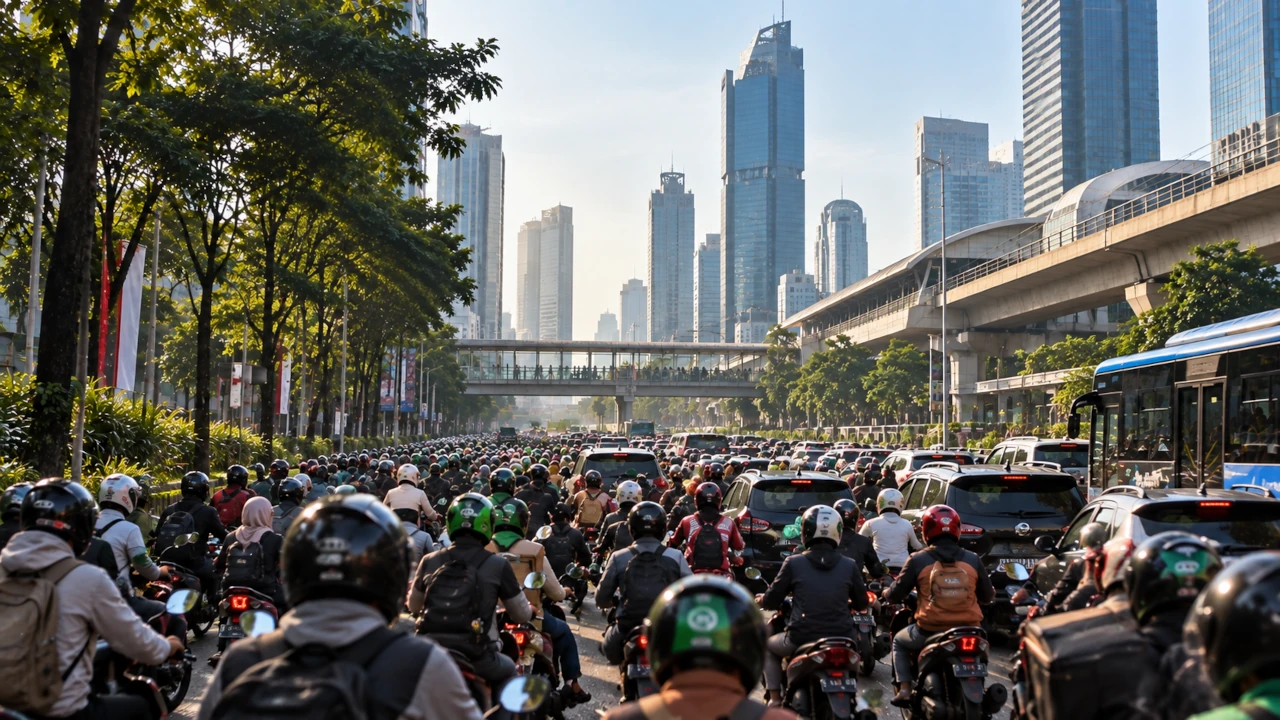
Jakarta – Indonesia is an archipelago connected by more than its roads and waterways. Across its cities, towns, and rural communities, motorcycles have become an essential part of everyday life. They help people commute to work, transport goods, reach schools, and run small businesses. This deep connection between people and two-wheelers has made motorcycles in Indonesia a defining feature of the country’s mobility landscape.
The importance of motorcycles extends well beyond transportation. They support millions of daily journeys and help businesses operate in areas where public transport or larger vehicles may be less practical. Meanwhile, the domestic market continues to attract manufacturers, dealers, component suppliers, and service providers.
Recent industry figures reinforce this position. According to the Indonesian Motorcycle Industry Association (AISI), domestic motorcycle sales reached 5,016,421 units between January and September 2026. The figure highlights the scale of the Indonesian motorcycle market, even before the final quarter of the year.
Motorcycles in Indonesia Remain Essential to Daily Mobility
Several factors explain why motorcycles remain so popular across the country. Their relatively compact dimensions make them practical for navigating crowded urban streets. Riders can also use them to reach residential areas, workplaces, and commercial districts that may be difficult to access with larger vehicles.
Affordability is another important consideration. Buyers can choose from a wide range of models and price points. Running costs, fuel consumption, and maintenance requirements also influence purchasing decisions, although these vary by model and riding conditions.
Motorcycles serve different purposes across Indonesia. In major cities, commuters often rely on them to navigate traffic and reduce travel times. In smaller towns, riders use them to connect homes with markets, schools, farms, and other essential destinations.
The rise of digital services has expanded their role further. Delivery workers, online motorcycle taxi drivers, and small business owners rely on two-wheelers to support their income. For many households, a motorcycle is not simply a personal vehicle. It is also a practical tool for work and economic activity.
Automatic scooters have become especially prominent in the market. Their twist-and-go operation appeals to riders who want a straightforward commuting experience. However, underbone motorcycles and sport models continue to serve customers with different preferences and riding needs.
This diversity helps explain the resilience of motorcycles in Indonesia. Consumers do not buy two-wheelers for a single purpose. They choose vehicles that fit their budgets, daily routines, and local conditions.
Domestic Motorcycle Sales Surpass Five Million Units
AISI recorded domestic motorcycle sales of 5,016,421 units during the first nine months of 2026. That represented an increase of approximately 3.7% from the same period in 2025, when sales reached 4,836,891 units.
September delivered the strongest monthly result of the year so far. Domestic sales reached 654,343 units, up from 596,461 units in August. The September total also exceeded the 567,173 units recorded in the same month of 2025.
The monthly figures show that demand does not move in a straight line. Sales declined in March before recovering in April. They dipped again in May, then increased in June and July. August brought another slowdown, followed by a stronger result in September.
These fluctuations reflect the changing conditions that manufacturers and dealers must navigate throughout the year. Product availability, consumer purchasing power, financing conditions, and promotional activity can all influence demand.
Nevertheless, the cumulative total shows that the Indonesian motorcycle market continues to operate at a substantial scale. With more than five million units sold by September, the industry had already completed a significant share of its annual business before the final three months.
The figures also demonstrate why Indonesia remains an important market for motorcycle manufacturers. Even modest changes in monthly demand can translate into substantial differences in unit sales because the market is so large.
Indonesia’s Motorcycle Industry Reaches Beyond Domestic Buyers
The country’s motorcycle industry also serves international markets. AISI’s statistics cover three export categories: completely built-up (CBU) motorcycles, completely knocked-down (CKD) motorcycles, and parts shipped individually.
From January to September 2026, Indonesia exported 487,940 CBU motorcycles. CKD exports reached 5,981,553 units or sets as reported in the industry statistics. Exports of individual parts totalled 134,195,982 units.
These figures represent different forms of trade and should not be combined as if they were equivalent numbers of complete motorcycles. CBU exports refer to finished motorcycles ready for distribution. CKD exports involve motorcycles shipped in disassembled form for assembly, while part-by-part exports cover individual components.
The distinction matters when assessing Indonesia’s role in the global automotive supply chain. The country does not only produce motorcycles for domestic riders. Its industrial ecosystem also supports the movement of vehicles and components across borders.
Manufacturers and suppliers participate in a broader network that includes production, assembly, logistics, and distribution. This creates opportunities for companies operating in different parts of the supply chain, from vehicle manufacturing to component production.
The export figures also reveal different trends across the three categories. CBU exports increased by approximately 19% compared with the first nine months of 2025. CKD exports declined by around 4.5%, while part-by-part exports rose by approximately 35.6%. These changes suggest that export performance varies according to the form in which products and components reach overseas markets.
A Large Market Also Brings Greater Responsibilities
The scale of motorcycle use in Indonesia creates challenges alongside its economic benefits. Road safety remains a major concern as millions of riders share roads with cars, buses, trucks, pedestrians, and other vehicles.
Safe riding habits, appropriate protective equipment, vehicle maintenance, and effective enforcement all play important roles in reducing risks. Manufacturers, dealers, workshops, government agencies, and riding communities can contribute to improving safety standards.
Maintenance is particularly important for riders who depend on their motorcycles every day. Regular checks of tyres, brakes, lighting, engine oil, and other essential components can help identify problems before they become more serious. For people who use motorcycles to earn a living, unexpected breakdowns can also mean lost working hours and income.
The industry must also respond to changing expectations around emissions and energy efficiency. Electric motorcycles offer an alternative for some users, but broader adoption depends on factors such as purchase prices, charging or battery-swapping access, and the availability of suitable models.
There is no single solution for every rider or region. Indonesia’s varied geography, infrastructure, and household budgets mean that different types of motorcycles will continue to serve different needs.
The Future of Indonesia’s Two-Wheel Economy
Indonesia’s relationship with motorcycles is likely to remain important as the country’s cities and regional economies develop. Manufacturers will need to balance affordability, product innovation, safety, and environmental considerations while responding to changing consumer expectations.
The domestic market provides a substantial foundation. More than five million motorcycles were sold during the first nine months of 2026, while export activity demonstrated the industry’s connections to international markets.
These figures tell only part of the story. Behind every motorcycle are riders, families, businesses, dealers, mechanics, manufacturers, and suppliers who depend on the wider two-wheel ecosystem.
That is what makes Indonesia more than a large motorcycle market. Its two-wheel culture connects everyday mobility with employment, commerce, manufacturing, and international trade.
Across this vast archipelago, motorcycles remain a practical answer to the country’s diverse transportation needs. Their significance is measured not only in sales figures, but also in the journeys they enable and the economic activity they support.
For Indonesia, the road ahead will depend on how effectively the industry can preserve that accessibility while building a safer, more competitive, and increasingly sustainable future on two wheels.